How to Get a Baby to Sleep in a Hotel Room
Getting a baby to sleep in a hotel room comes down to three moves: rebuild their home sleep cues (dark, white noise, same routine) in the first ten minutes after check-in, place the travel crib out of your sightline — an entry alcove, a closet nook, even a large bathroom can become the “nursery” — and have a plan for the hours after baby’s bedtime when the room goes dark and you’re still awake in it. One-room nights are a solvable problem; they’re just a different problem than sleep at home. Here’s the survival system, honed over more hotel nights than I can count.
The 10-minute room setup (do it before anything else)
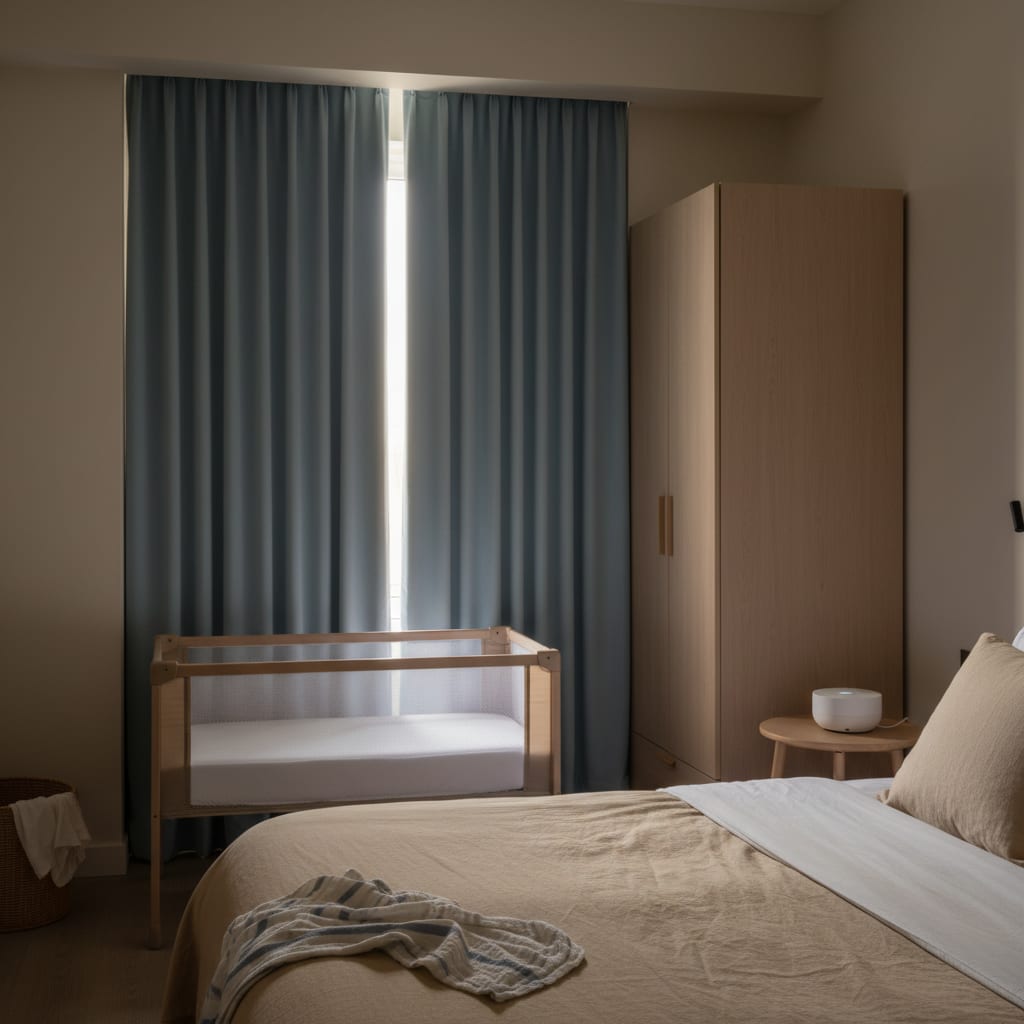
Walk in, drop the bags, and set up sleep before anyone opens the snack pouch — because you want the room “done” before the first nap or bedtime sneaks up on you, not negotiated in the dark with an overtired baby. The sweep: assemble the travel crib, kill the light leaks (clip the curtains shut with the pants-hanger clips from the closet — the oldest trick in the mom playbook — and lay a towel along the door gap), plug in or cue up white noise (a portable machine like the Yogasleep Rohm) near the crib but not blasting into it, and set the thermostat to cool-side-of-comfortable. Then run bedtime exactly as you do at home: same order, same sleep sack, same phrases. Familiar routine is the most portable sleep cue there is — the full kit-and-routine system is in my baby sleep while traveling guide.
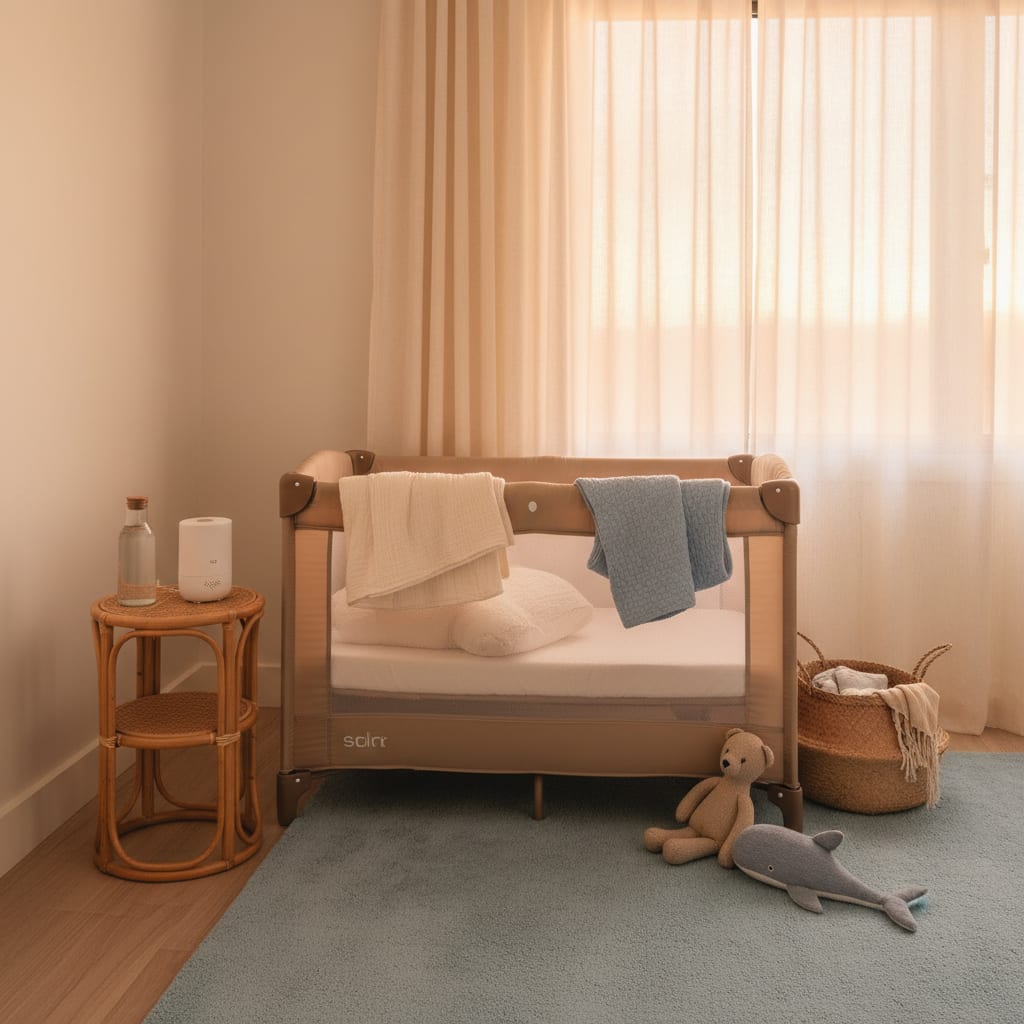
Safe-sleep rules don’t take vacations: baby on their back, in the travel crib with a firm, flat mattress and a bare interior — no pillows, blankets, or draping anything over or into the crib. If the hotel provides a crib, inspect it like a skeptic (sturdy, correct-size mattress, nothing loose) before you use it.
Crib placement: out of sightline is the whole game
Babies past the newborn haze sleep worse when they can see you — you are more interesting than sleep, and every time you shift on the bed you’re a show. So the placement hierarchy goes: best, a genuinely separate nook — an entryway alcove, a deep closet with the door left open, the far side of an L-shaped room; good, behind a visual screen you improvise from the room’s furniture — the crib tucked past the wardrobe, or with an armchair angled as a sightline break (never drape fabric over the crib itself); workable, the classic corner-by-the-window with the crib’s solid end toward your bed, so a baby who stands can’t lock eyes with you. Book with this in mind: suites, aparthotels, or rooms listed with an entry hall out-sleep glamorous open-plan rooms every single time, and an emailed “crib placement” question to the hotel costs nothing.
The bathroom-as-nursery trick (yes, really)
Seasoned traveling parents whisper about this one: in many hotel rooms the bathroom is the only space with a real door, and a large one can host the travel crib for baby’s first stretch of the evening — turning a studio room into a “two-bedroom” while you read in lamplight like a human. Do it safely or not at all: air the room out first (no lingering shower steam or heat), confirm it’s cool and ventilated, position the crib away from anything reachable — cords, counters, towel bars — put a monitor on the crib, and leave the door ajar. The variation that’s just as effective in reverse: baby gets the bedroom, and you take the bathroom or the balcony for the evening — many a hotel bathtub has hosted a parent, a pillow, and a phone at 8:30pm. It sounds ridiculous; it beats sitting in the dark.
Surviving the shared-room night
After lights-out, go boring: screens on night-shift brightness, headphones, whispers. If baby wakes overnight, respond the way you do at home but dimmer and quieter — hallway-side lamps stay off, and treat anything before a civilized hour as a night waking, not a morning. The first night in any new room is usually the worst; babies typically settle dramatically by night two once the space smells and sounds familiar, so don’t rewrite your whole approach at 2am on night one. If you’ve also changed time zones, that’s a separate beast with its own playbook — my baby jet lag guide covers the light-and-schedule system that fixes the clock underneath the room problem.
Keep the plan portable: timing travels better than gear
Here’s the quiet truth about hotel sleep: the families who do best aren’t the ones with the fanciest blackout gear — they’re the ones who know their baby’s schedule cold and transplant it. When you know the target wake windows and nap times, you can rebuild the day anywhere: hotel room, grandma’s guest room, a new time zone. That’s the real value of running a structured plan at home — a personalized program like Betteroo (a baby-and-toddler sleep app) builds your baby’s nap windows and bedtime from their age and adapts as they grow, which means that on the road you’re adjusting a known plan instead of guessing from scratch. No app makes a strange room familiar — that part is still routine, darkness and repetition — but knowing exactly when the next nap should land removes half the chaos of a one-room night. If it’s your first trip out with the baby, start gently: my list of the easiest places to take a baby is built around exactly these easy-sleep setups.

FAQ: baby sleep in hotel rooms
Where should the travel crib go in a hotel room?
Out of your sightline if at all possible — an entry alcove, an open closet nook, or behind a furniture screen — because babies who can see their parents fight sleep harder. Keep it clear of windows, cords and curtains, and never drape anything over the crib.
Is it safe for a baby to sleep in a hotel bathroom?
It can be a reasonable short-term setup in a large, ventilated bathroom: cool air, no shower steam, the crib clear of cords and counters, a monitor running and the door ajar. If the bathroom is small, steamy or cluttered, skip the trick and screen the crib in the main room instead.
What if my baby won’t sleep in the travel crib?
Practice at home first — a few naps in the travel crib before the trip makes it familiar territory rather than a strange box. On the road, keep the routine and sleep sack identical, expect a rough first night, and hold steady; most babies settle by night two.
Should I keep my baby’s home schedule at a hotel?
Yes — same wake windows, nap times and bedtime routine, shifted to local time if you’ve changed zones. A consistent schedule is the most portable sleep cue you have; it’s the room that changed, so keep everything else the same. When in doubt about sleep setups, run it by your pediatrician.