Road Trip With Kids: The Sanity-Saving Guide
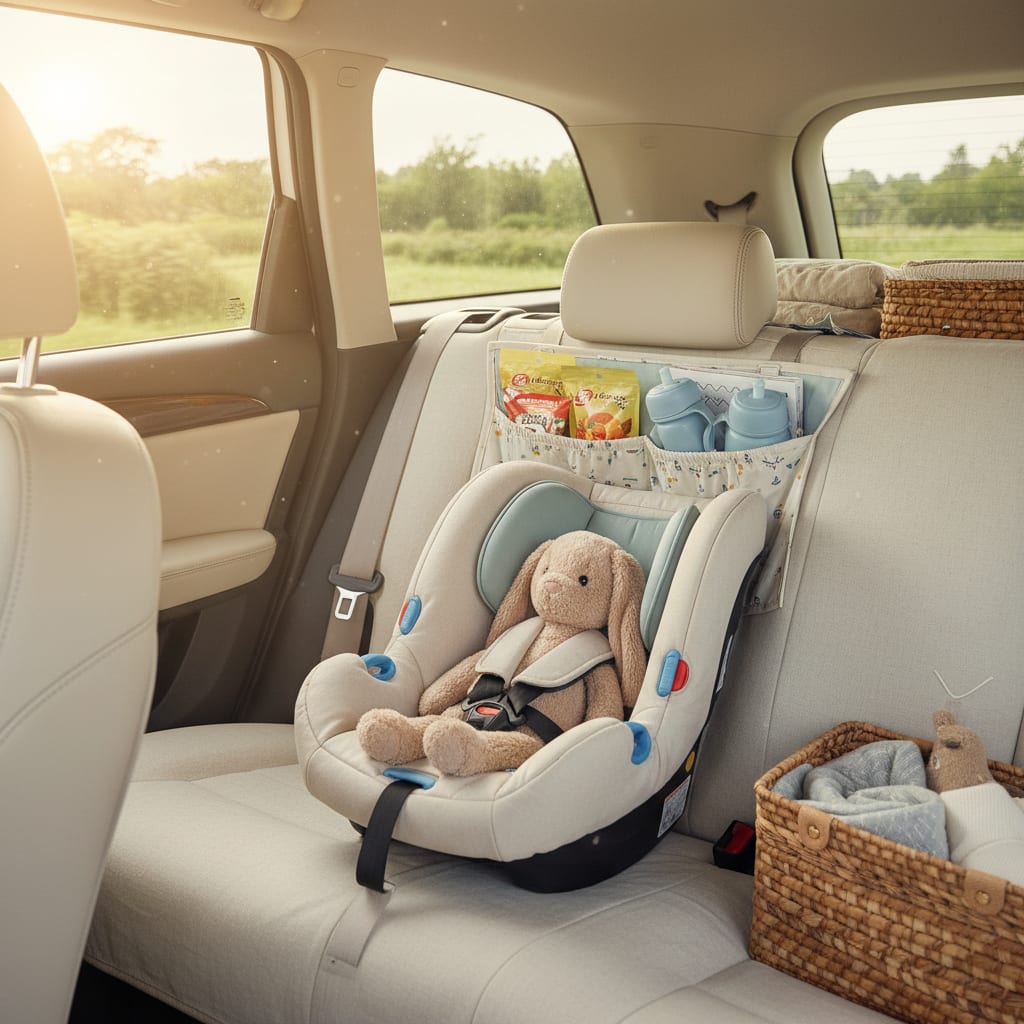
A good road trip with kids runs on three systems: timing (drive the nap windows, not through them), cadence (a real stop every two to three hours, no exceptions for “making good time”), and supply lines (a snack strategy with the discipline of a military operation). Get those three right and the backseat mostly manages itself; get them wrong and no playlist on earth can save you. Here’s the full playbook from a family that has done the eight-hour haul with a baby, a toddler, and one adult who claimed to be “fine to push through.” (He was not.)
Timing: the nap window is the whole strategy
The single best road-trip decision is when you turn the key.
- With a napping baby or toddler: leave 20–30 minutes before nap time. The car does the sleep transition for you, and you bank one to two silent highway hours immediately.
- The dawn raid: for long hauls, leaving very early — transferring kids to the car half-asleep — can buy you two or three free hours before anyone requests services.
- Never depart at peak wakefulness. Leaving right after breakfast, when everyone is fed, rested, and fizzing with energy, wastes their best mood on a car seat and spends their worst on your arrival.
Plan the day’s drive around sleep, and protect that sleep at the destination too — the travel sleep guide covers the arrival end of the equation.
Stop cadence: every 2–3 hours, and make them count
Babies need feeding and changing roughly every two hours; toddlers need to run. The counterintuitive rule: stops where kids exercise save time overall. A 40-minute stop with a playground beats a 15-minute gas-and-dash that’s followed by an hour of backseat insurrection.
- Scout stops ahead: rest areas with grass, fast-food spots with play areas, town playgrounds two minutes off the highway.
- Run the drill at every stop: everyone pees, everyone runs (yes, sprints — races to the fence and back), water bottles refilled, one snack-bag restock.
- Budget honestly: a “six-hour drive” is eight hours with kids. Writing 8 on the plan and arriving at hour 7.5 feels like winning; the reverse feels like defeat.
The snack strategy: supply lines win wars
Snacks on a road trip aren’t food; they’re time, currency, and mood regulation.
- The parent-controlled ration system. One central snack bin up front, dispensed in small installments. An open bag of anything in the backseat has a lifespan of ninety seconds and a blast radius of one vehicle.
- Novelty tiering. Familiar snacks for baseline, new-and-interesting ones held back for the hard final hour. The gas-station “choose one thing” stop is a legitimate strategic reserve.
- Low-chaos picks: things that don’t melt, stain, or roll under seats. Pouches, crackers, cut fruit in containers. Save the crumb-storms for outside.
The full loadout — cooler, organizer, spill-proof cups — lives in my packing list and the travel essentials roundup.
Entertainment by age
- Babies: a back-seat mirror, soft toys on rotation, music, and an adult in the backseat for the fussy stretches. Honestly, they mostly sleep or object; there is no hack.
- Toddlers (1–3): sticker books, window clings, chunky vehicles, pointing at trucks (hours of content), and short audio — songs and simple stories.
- Preschool (3–5): audiobooks change everything. Add I Spy, magnetic drawing boards, and the “mystery bag” — a dollar-store item revealed each hour, which is bribery with a schedule and I stand by it.
- School-age: license-plate games, twenty questions, family playlists with rotating DJ rights, and longer audiobooks the adults secretly enjoy too.
- Screens: we hold them as the final stage. A tablet deployed at hour one has nothing left to give at hour six; a tablet deployed at hour six is a miracle of engineering.
Where should the road actually lead?
Drivable beach weeks are the natural pairing — for much of the Southeast that means the Gulf side of my Florida resort roundup, and for everyone else, whatever lake, coast, or cabin sits inside the magic five-hour radius. Under five hours, drive without question. Five to nine, drive with this playbook. Past nine or ten hours, compare honestly against a flight — sometimes the plane is the sanity-saving option.
FAQ: road trips with kids
How often should you stop on a road trip with a baby?
Roughly every two hours for feeding, changing, and a break from the car seat — infant car-seat guidance generally discourages very long unbroken stretches, and babies enforce the rule anyway. With toddlers, every two to three hours with real running time works best.
What’s the best time to start a long drive with kids?
Either just before a nap window (the car does the soothing) or very early, moving kids to the car sleepy. The worst start is mid-morning at maximum energy, which spends their best hours strapped down.
How many hours in the car is too many for kids?
Most families’ honest ceiling is eight to ten hours including stops — roughly a six-to-seven hour map estimate. Beyond that, consider splitting the trip with an overnight; a motel with a pool converts the journey into part of the vacation.
Should we drive overnight instead?
It can work brilliantly — sleeping kids, empty roads — if two adults can genuinely split the driving and the next day is a write-off for recovery. Never attempt it on one tired driver; arriving is the entire point.