Big Island With Kids: Volcanoes, Kona and Calm Bays
The Big Island with kids is the Hawaii trip for families who want more than a beach. It has calm, reef-protected bays for little swimmers, a national park where you can watch an active volcano, and green sea turtles on the snorkel beaches. The catch is size: everything is a drive. Stay on the dry west side, in Kona or on the Kohala Coast, for the beaches, and plan the volcano as one long day or a night near the park. With under-fives, choose a resort with a lagoon and keep the driving days to two. Here’s how to split the island, which beaches suit which ages, and how to do the volcano without a meltdown.
Kona, Kohala or Hilo: where to base yourselves
The Kohala Coast is the resort strip north of Kona airport. It is dry, sunny and built around big resorts with pools, lagoons and calm sandy coves. With small children it’s the easiest base, because the beach day happens at the hotel.
Kona (Kailua-Kona and Keauhou) is the town side. It has more condos and cheaper hotels, restaurants you can walk to, and the best-known snorkel beach on the island. It’s the value base, and it’s closer to the south Kona sights.
Hilo is on the wet, green east side. It has waterfalls, gardens and a small-town feel, and it’s much closer to Hawaiʻi Volcanoes National Park. It’s not a beach base. Think of it as a one- or two-night stop for the volcano.
My default with young kids: five nights on the Kohala Coast or in Kona, then one night on the Hilo side or near the park for the volcano. The island has two main airports, Kona on the west side and Hilo on the east. Flying into one and out of the other saves the long drive back.
Beaches by age
The west side’s calm water is in protected bays. These are the ones that work for families, but conditions change daily. Check the live hazard rating on Hawaii Beach Safety and swim near a lifeguard.
Under five: the resort lagoons and Spencer Beach. Several Kohala resorts have man-made or reef-sheltered lagoons, and for a toddler that’s the whole beach. Off the resorts, Ohaiʻula, better known as Spencer Beach Park, is the family pick. The state tourism site says it’s “well protected by an outside reef”, with calm swimming and snorkeling waters on most days, and it lists restrooms, showers, picnic tables and a lifeguard. It’s in Kawaihae, about half an hour north of Kona airport.
Three to seven: Hāpuna. Hāpuna Beach State Recreation Area is the classic long white-sand beach on the Kohala Coast. The state describes swimming during calm seas and has lifeguards. It also warns about dangerous rip currents and pounding shore break during high surf, and says that waves over 3 feet are for experts only, so everyone else should stay out of the water. Go in the morning and read the water before you unpack. In October 2026 it charged non-residents $5 per person (children 3 and under free) and $10 to park, by card only.
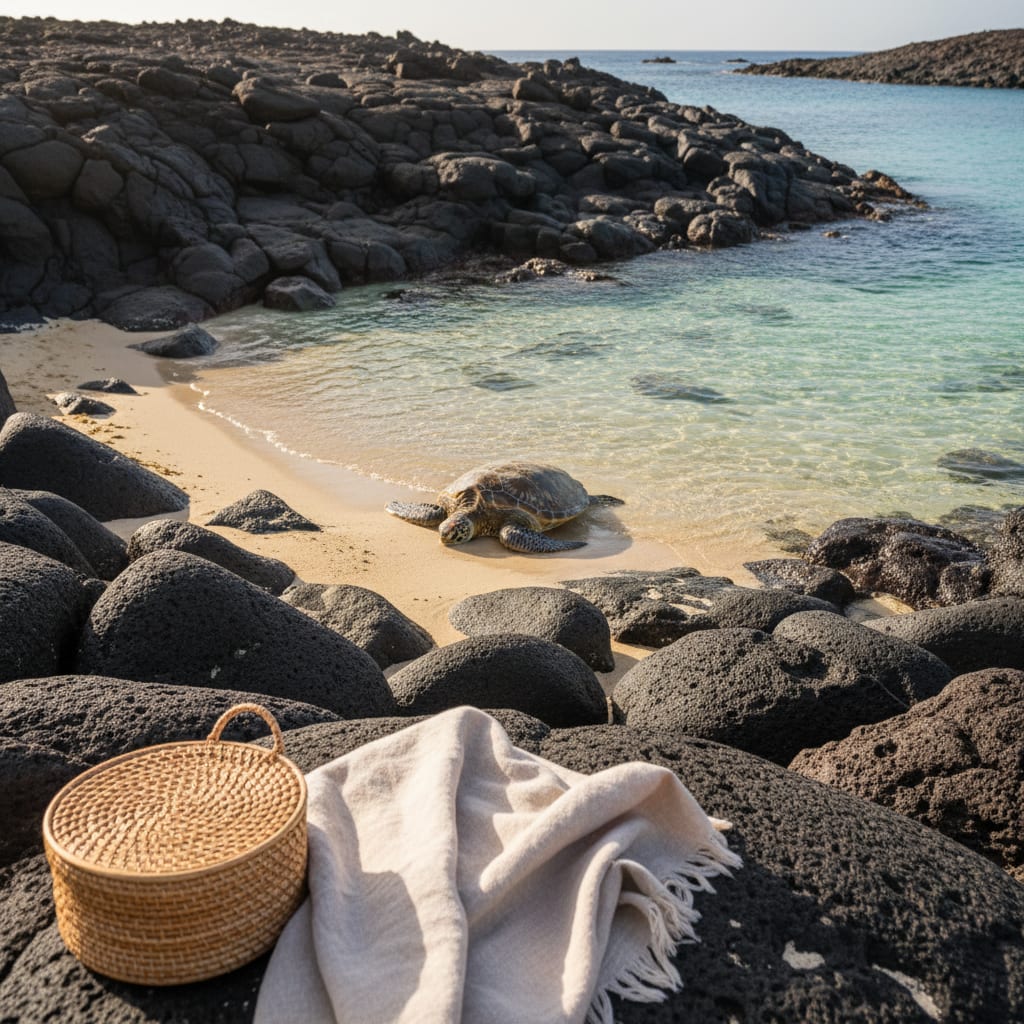
Six and up: Kahaluʻu. Kahaluʻu Beach Park, just south of Kailua-Kona in Keauhou, is the island’s famous beginner snorkel spot. It has calm water and green sea turtles that come to the shore, plus a lifeguard. It’s also busy, and Hawaii Beach Safety lists strong currents, sharp coral and slippery rocks among its hazards. Kids who can float with a mask and keep their feet off the coral will love it. Give turtles plenty of space on the sand and in the water.
What to pack for the water: lava rock and coral are sharp, so closed-toe water sandals like the KEEN Newport H2 save a lot of tears. Use a mineral sunscreen such as Blue Lizard Baby, and put a rash guard on young children so you only need sunscreen on their face, hands and feet.
The volcano day
Hawaiʻi Volcanoes National Park is open 24 hours a day, every day. That matters, because the eruption glow is best after dark and the crowds are smallest early in the morning. Five things to know before you go with children:
- It’s cold up there. The summit of Kīlauea is around 4,000 feet, and the park says it can be 12 to 15 degrees cooler than sea level and rainy any time of year. Pack fleeces and rain jackets, especially for an evening visit.
- Air quality matters for kids. The park says volcanic gases are a particular risk for infants, children, pregnant women and anyone with heart or breathing problems, and asks visitors to check the air quality before they go. If your child has asthma, check it again in the morning and have a plan B.
- Parking fills early. The park says lots can be full by 10 a.m., especially in December, January, June and July. Arrive early or after the day-trippers leave, and have a backup stop in mind.
- The visitor center is closed for renovation. Kīlauea Visitor Center is closed for two years. The Welcome Center on Crater Rim Drive West, 1.2 miles from the entrance, is where you get maps and ranger advice. Summit construction also means some closures and delays.
- Pay before you arrive. The park is cashless. In October 2026 a private vehicle pass was $30, valid for everyone in the car. Children under 16 who arrive on foot or by bike don’t need a pass.
What to do with kids. The eruption, when the volcano is active, can be seen from overlooks along Crater Rim Drive, and the park points you to Crater Rim Drive West for the Welcome Center, Kīlauea Overlook and Uēkahuna. On the east side of the summit are Nāhuku, the lava tube, and the Kīlauea Iki area. Use the park’s live webcam before you set off: the eruption pauses between episodes, and on a quiet day there may be little more than a glow. Children up to 12 can do the Junior Ranger program and earn a badge, which gives a younger child something to do between overlooks. Stay on marked trails and behind barriers. The ground has cracks and steep drops, and closed areas are closed for a reason.
How to plan it. With under-fives, do the summit in the afternoon, eat early, then see the glow just after dark and drive back to a bed near the park or in Hilo. With older kids, Chain of Craters Road down to the coast is a spectacular drive, but it’s long and the coastal end is often hot and windy.
Other days that work with kids
Puʻuhonua o Hōnaunau. This national historical park in south Kona was a place of refuge. In old Hawaii, someone who had broken a sacred law could escape punishment by reaching it. That story works well with school-age kids. The gates open at 8:15 a.m. and close at sunset, and the park is cashless. If you’re also visiting the volcano and Haleakalā on Maui within a year, the $55 Hawaiʻi Tri-Park pass covers all three.
Hilo’s waterfalls and gardens. The east side is wet and green, and an easy waterfall stop fits on the way to or from the volcano. Some state park trails were damaged in the 2026 storms. In mid-October, the state said part of the ʻAkaka Falls trail was still closed because of fallen trees. Check the state parks notices before you drive.
A pool day. On a trip this big, plan at least one day with no driving at all. Small children need it, and so does the driver.
Where to stay
Hilton Waikoloa Village (Kohala Coast). Best for: a resort you never have to leave · Mid. Pools with slides, a lagoon instead of a swimming beach, and boats and a tram to get around the grounds. It’s big and busy, but with toddlers it’s the easy option, and it’s on my Hawaii family resorts list for that reason.
Mauna Lani, Auberge Resorts Collection (Kohala Coast). Best for: a quieter splurge · Splurge. An oceanfront Kohala Coast resort, calmer and more grown-up than the Hilton. Best with kids old enough to enjoy the snorkeling and the beach rather than the waterslides.
OUTRIGGER Kona Resort and Spa (Keauhou). Best for: the Kona side on a budget · Mid. A big oceanfront hotel close to Kahaluʻu and the south Kona sights. Check whether a daily resort fee is added before you compare prices.
For the volcano night, book a simple room in Hilo or in Volcano village. You only need a bed near the park.
Getting around and timing
You need a car. Distances are long, and the volcano, the Kona snorkel beaches and Hilo are on different sides of the island. Book a rental with car seats early or bring your own, and give yourself a day with no driving between long days.
The weather is more varied than a beach postcard suggests. The Kohala and Kona coasts are usually the sunny side, while Hilo is rainy. The summit of Kīlauea is cool. Pack for all three. If you’re still choosing an island, Maui with kids is the classic resort-beach trip and Oahu with kids is the easiest first visit.

FAQ: the Big Island with kids
Is the Big Island good for young kids?
Yes, if you base yourselves on the Kohala Coast or in Kona and keep the long drives to one or two days. The resort lagoons and reef-protected bays like Spencer Beach give toddlers calm water, and the volcano is a highlight from about five.
Can you see lava at Hawaiʻi Volcanoes National Park with kids?
Sometimes. When the volcano is active, the eruption in Halemaʻumaʻu crater can be seen from overlooks along Crater Rim Drive, and the glow is best after dark. The eruption pauses between episodes, so check the park’s webcam before you drive.
Is volcanic air safe for children?
The park says volcanic gases are a particular risk for infants, children, pregnant women and people with heart or breathing problems. Check the park’s air quality reading before you go and on the day, and ask your pediatrician first if your child has asthma.
Which side of the Big Island is best for families?
The west side. The Kohala Coast has the easiest resort beaches and lagoons, and Kona is the value base with the best-known snorkel beach. Hilo is better as a one- or two-night stop for the volcano and the waterfalls.
How many days do you need on the Big Island with kids?
A week is comfortable: five nights on the west side for beaches and snorkeling, and one or two near the volcano. With fewer days, skip Hilo and do the volcano as one long day from the west side.