Connecting Hotel Rooms With a Toddler: A Dark Room for Naps
If your toddler still naps, two connecting hotel rooms are the easiest way to get them a dark, quiet room while the rest of you carry on next door. Book both rooms on one reservation, ask for confirmed connecting rooms rather than “nearby”, and give your child the quieter, darker room. Wedge the inner doors open, put the travel crib away from the window, and latch the corridor door on their side. It costs a second room rate, so it pays off most on stays of four nights or more.
One room works at night, when everyone is asleep. It fails at the 1pm nap and the 7:30 bedtime, when one person needs dark and quiet and everyone else is still awake.
Why a second room beats a darker corner
In a single room, the nap means everyone whispers in the dark. My guide to hotel room naps covers how to make one room dark enough, and it works, but it’s still one room.
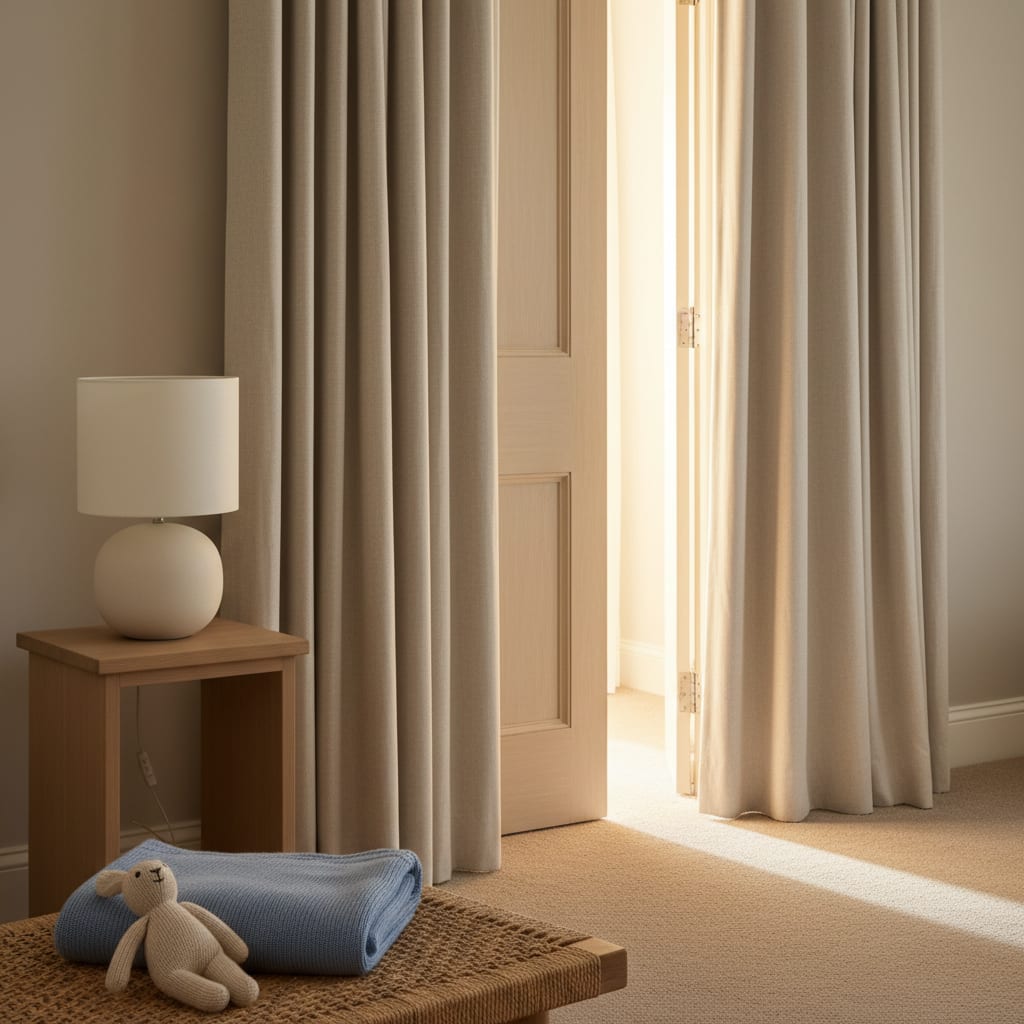
With a connecting door, your toddler gets a room with the curtains shut and white noise on. Next door, you can open the drapes, make lunch and talk at a normal volume. At bedtime you get your evening back, with a lamp on. And a toddler who can’t see you from the crib settles faster; my hotel room sleep setup explains why sightlines matter so much.
Connecting, adjoining, adjacent: use the right word
- Connecting rooms have a door between them inside. This is what you want.
- Adjacent rooms (or “next to each other”) share a wall but have no inside door. To reach your child, you’d go out into the hallway.
- Adjoining is used both ways. Some hotels mean connecting, some mean next door.
So ask: “Is there a door between the two rooms inside?” Adjacent rooms don’t work with a napping toddler.
How to book connecting rooms
Book both rooms on one reservation. Hilton announced in June 2021 that guests can book and instantly confirm connecting rooms on Hilton.com or the Hilton Honors app. At participating hotels, you tick the connecting-rooms box and the booking confirms them together (announcement loaded 2026-11-07). Check that your hotel participates.
Elsewhere, it’s usually a request. Hilton’s announcement describes the old process: ask when booking, follow up by phone and email, and often get confirmed only at check-in. Unless your hotel offers a confirmed booking, assume it works that way. So:
- Book directly with the hotel, not through a third-party site, so both rooms are in the hotel’s own system.
- Call the hotel itself, not the central reservations line, a few days before you arrive. Ask them to note the connecting request on both rooms.
- Ask again at check-in, and arrive as early as you can. A hotel has only so many connecting pairs, and on a busy night they go to whoever is at the desk first.
Ask for the crib on the same call, delivered to the right room.
Compare the cost. Two rooms means two room rates plus taxes. Price it against a suite or a two-bedroom vacation rental for the same dates. My all-inclusive vs vacation rental comparison explains why a bedroom door matters so much with small kids.
Which room your toddler gets
Choose the toddler’s room on purpose:
- Fewer windows, no balcony door, courtyard side if there’s a choice. Less light, less street noise.
- Further from the elevator and ice machine. If one room is closer to them, put the adults there.
- The crib away from the window. HealthyChildren, the AAP’s site for parents, says not to place a crib or any child’s bed near a window, partly because of falls and partly because of cords on blinds and drapes.
Then make it dark. A suction-cup blind like the Tommee Tippee portable blackout blind covers most of a hotel window. A pocket-sized white noise machine like the Yogasleep Rohm helps with corridor noise and your voices next door. Set the thermostat to about 68 to 72°F (20 to 22°C).
Setting up the connecting door
Connecting rooms usually have two doors back to back, one in each room, and each one locks from its own side. Open both on arrival and keep them open all stay. Some swing shut on their own, so pack two rubber door stoppers, one per door. During naps, keep the lights low and the TV at the far end of your room.
If you’ll be out on the balcony or in the shower, an audio monitor helps. The VTech DM111 runs on DECT, not Wi-Fi, so it doesn’t need the hotel’s network. It’s an extra, not a replacement for the open door.
Toddler-proof the second room in five minutes
Your toddler’s room has its own corridor door. Before the first nap:
- Use the security latch on their corridor door. The swing bar or chain is usually set high, out of a small child’s reach, so a toddler who climbs out of the crib can’t wander into the hallway.
- Lock the balcony door and move furniture away from windows. Nationwide Children’s Hospital’s window-fall guidance says window screens won’t stop a child from falling, and that children climb furniture to reach windows. That includes armchairs, luggage racks and the desk chair.
- Clear what a climber can reach: the kettle and hair dryer cords, glasses, the iron and the minibar.
Betteroo’s checklist for a toddler’s room at home covers the same ground: anchored furniture, cordless window coverings and a plan for a toddler who wanders. In a hotel you can’t anchor anything, so move it.
Babies under six months: share a room at night
This plan is for toddlers. For young babies, the AAP recommends that you share a room with your baby for at least the first 6 months: your baby’s sleep space in the room where you sleep, but never in your bed. AAP says room sharing can lower the risk of SIDS by as much as 50%.
So with a young baby, the crib goes in the room where you sleep. The second room is where an older sibling sleeps, or where you spend the evening before bed. At any age, the crib or play yard needs a firm, flat mattress with nothing else in it, and your baby goes down on their back.
 Know when to close the curtains
Betteroo builds your toddler's nap time and bedtime from their age, so you know when the second room needs to be dark.
Take the free sleep quiz →
When a second room isn’t worth it
For two or three nights, skip it: darken one room, take naps where they fall and protect bedtime. A child who has mostly dropped the nap often needs only an hour of quiet time.
If you can’t get connecting rooms and end up sharing a bed with your preschooler, that works too. My guide to sharing a bed with your kid on vacation covers how to set it up and how to undo it at home.
FAQ: connecting hotel rooms with a toddler
Are connecting rooms guaranteed?
Not unless your booking confirms them. Otherwise they’re a request, often settled at check-in. Hilton’s Confirmed Connecting Rooms confirms them at booking at participating hotels.
What’s the difference between connecting and adjoining rooms?
Connecting rooms have a door between them inside. “Adjoining” can mean that or just next door, depending on the hotel. Ask whether there’s an inside door.
Is it safe for a toddler to sleep in the connecting room?
For a toddler, yes, if the inside doors stay open, the corridor door is latched, the balcony door is locked and furniture is away from windows. Babies under six months should sleep in the room where you sleep.
Is a suite better than two connecting rooms?
A suite with a bedroom door does the same job with one key and one bill. Two connecting rooms give you two bathrooms and often more space. Compare the prices for your dates.