Oahu With Kids: Beaches, Budget and Where to Stay
Oahu is the easiest Hawaiian island to do with young children, and usually the cheapest — it has the most flights, the most hotels at every price point, the calmest sheltered swimming water in the state, and enough non-beach attractions to fill the days when the ocean is off. The decision that shapes your whole trip isn’t which sights to see; it’s where you sleep. Waikiki, Ko Olina and the North Shore are three genuinely different vacations on one island. Here’s how to choose, and what to do once you have.
Waikiki vs Ko Olina vs the North Shore
Waikiki is the walkable option. You can leave the hotel without a car, and within a few blocks there’s a beach, an aquarium, a zoo, shave ice, dozens of restaurants at every price and a supermarket. The eastern end near the Kuhio Beach breakwall is the calmest swimming — a chest-deep, wave-free pool where toddlers can splash safely. The trade-off is density: it’s a busy urban strip, the beach is crowded by mid-morning, and parking costs money every single day.
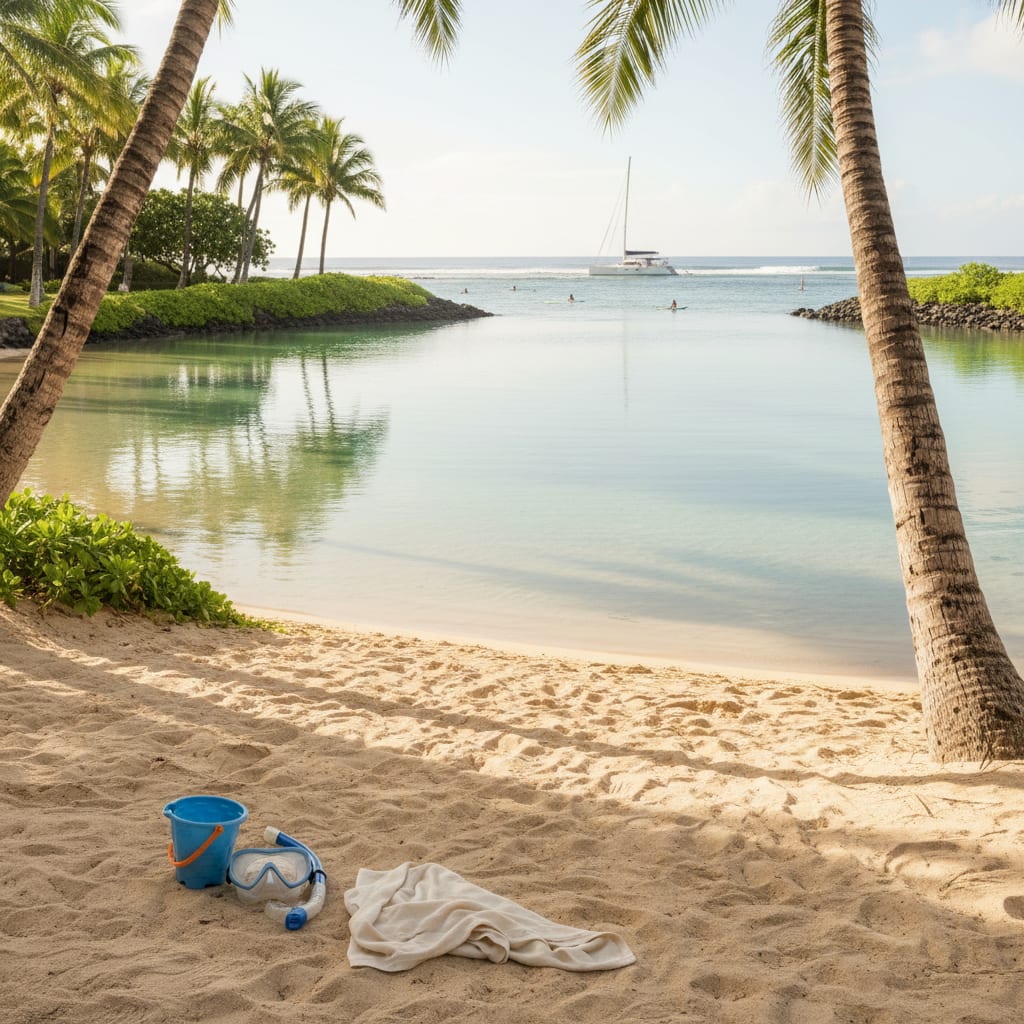
Ko Olina, about 40 minutes west, is the resort bubble. Four sheltered man-made lagoons with sandy bottoms and almost no surf — the single best toddler swimming water in Hawaii — plus a cluster of resorts with pools, and very little else within walking distance. If your kids are under six and your goal is “sit down for the first time in a year”, this is the right answer. If you want to see the island, you’ll be driving a lot.
The North Shore is the seasonal wildcard. In summer, Waimea Bay and Shark’s Cove are gorgeous, snorkelable and gentle. In winter, the same beaches carry enormous, genuinely dangerous surf, and the correct family activity is watching from the sand while a lifeguard hovers. It’s rural, quiet and beautiful, forty-five minutes to an hour from Honolulu on a good day.
My default for a first family trip: Waikiki for the first half, Ko Olina or the North Shore for the second, with one hotel change in the middle. A two-base week saves a lot of driving.
Beaches by age
Under three: the Ko Olina lagoons, full stop. Enclosed, shallow, sandy, with grass and shade behind them. In Waikiki, the Kuhio Beach walled section does the same job at a fraction of the price.
Three to seven: add Ala Moana Beach Park — a long protected reef-sheltered stretch just west of Waikiki with a wide sandbar, more space and far more local families than tourists. Kailua Beach on the windward side is spectacular and usually calm, with Lanikai next door.
Eight and up: Hanauma Bay for snorkeling, which requires an advance online reservation, closes on set days each week, and asks every visitor to watch a short conservation video before entering. Get the timing right and it’s the best introduction to a reef in the state. In summer only, Shark’s Cove on the North Shore is the other great snorkel spot for confident swimmers.
Two safety notes that matter more here than on Maui. Surf conditions are seasonal and side-specific — the north shore is wild in winter, the south shore is bigger in summer — so check the daily surf forecast rather than the guidebook. And the reef-safe sunscreen rules are real: bring mineral sunscreen, and reapply far more often than feels reasonable.
What to actually do
Pearl Harbor is the island’s headline historic site, and it’s a genuinely moving morning — but it’s an adult experience with children attached. Tickets for the USS Arizona Memorial program are timed and released online in advance; they go fast. The site enforces a strict no-bags policy with storage on site, which is a real logistics puzzle with a diaper bag. Under-fours are usually better left with the other parent; the Bowfin submarine and the Aviation Museum are more concrete, more visual and better suited to primary-age kids.
Honolulu Zoo and Waikiki Aquarium sit within walking distance of most Waikiki hotels and are the correct rainy-morning and jet-lagged-first-day answers. The aquarium is small and manageable; the zoo is comfortably a half day.
Kualoa Ranch, on the windward side, runs guided tours of a working ranch and valley that’s been a filming location for decades. It’s the closest Oahu comes to a theme-park day out, it books out ahead, and the age minimums vary by tour type, so read them carefully before buying.
The Polynesian Cultural Center near Laie is a full, long day — canoe pageant, village demonstrations, luau, evening show — and honestly too long for under-fives. With seven-to-twelves it’s often the trip highlight.
Diamond Head is a short, hot, popular hike with a reservation requirement for out-of-state visitors. Doable with kids who walk well; miserable in a carrier at midday. Go at opening.
Dole Plantation on the way to the North Shore is a reliable hour: train ride, maze, pineapple soft-serve. Nobody’s cultural highlight, everybody’s easy win.
Where to stay
Aulani, A Disney Resort & Spa (Ko Olina) — Best for: under-tens · Splurge. The lazy river, the snorkeling lagoon and Aunty’s Beach House — a supervised, included kids club — make this the most complete young-family property in Hawaii. You will barely leave. That’s either the appeal or the objection.
Marriott’s Ko Olina Beach Club (Ko Olina) — Best for: families who need a kitchen · Mid-to-splurge. Villa-style units with full kitchens and laundry, three pools, and the same lagoon access as its famous neighbour without the character-breakfast surcharge. For a week with small children, a washing machine changes the trip.
Hilton Hawaiian Village (Waikiki) — Best for: first-timers who want everything on site · Mid. Effectively a small town: five pools, a protected lagoon, a beach at the calm end of Waikiki, and Friday fireworks. Large and busy — but with kids, large means options when a plan collapses.
OUTRIGGER Waikiki Beach Resort (Waikiki) — Best for: beachfront without a resort-scale property · Mid. Directly on the sand in central Waikiki, with an oceanfront pool and the Beach Walk shops and restaurants a few minutes away. Note the daily resort fee and valet-only parking when you compare prices — the sticker rate isn’t the real rate anywhere in Waikiki.
The Ritz-Carlton O’ahu, Turtle Bay (North Shore) — Best for: families past the stroller stage · Splurge. Wild, quiet and beautiful, with sheltered coves for calm-day snorkeling and dramatic winter surf watching. Better from about age eight than with a toddler, and remote enough that you’ll eat mostly on property.
For how these stack up against the other islands, my Hawaii family resort roundup covers all four islands side by side.
Budget: what actually moves the number
Oahu is the value island, but only if you use what makes it cheap:
- Flights. Honolulu has by far the most mainland service of any Hawaiian airport, including routes the neighbour islands don’t get. If you’re flying with a lap infant or a young toddler, the direct-flight advantage matters more than the fare — the tactics in my flying with a baby playbook are worth reading before you book seats.
- Lodging spread. Waikiki has genuine budget hotels, condo rentals and family-run properties a few blocks back from the beach, which the resort strips on Maui simply don’t. Two blocks inland is a meaningful discount for a four-minute walk.
- Food. This is where families overspend. Oahu’s plate lunch spots, poke counters, farmers markets and food trucks are excellent and cheap, and a hotel room with a fridge and a supermarket run covers breakfast for the week.
- Fees. Resort fees and parking are charged daily and quoted separately almost everywhere. Add them before you compare two hotels — they can flip the ranking.
- Car. If you’re staying in Waikiki and doing one or two island days, renting a car only on those days beats paying overnight parking all week.
Free or nearly free, and genuinely good: Ala Moana Beach Park, the Kuhio Beach hula and torch-lighting evenings, the Ko Olina lagoon path, tide pools at low tide, and the Waikiki beach sunset — which with small kids is a better daily ritual than any paid attraction.
Timing and jet lag
Oahu is roughly five to six hours from the West Coast and around ten or more from the East, plus a time change of two to six hours depending where you start. Westbound is the kinder direction with children: they wake at their body-clock time, which lands before dawn for the first few days. Lean into it — the beaches are empty at 6am and the light is beautiful — and expect everyone to be on local time by mid-trip. Weather-wise, the leeward and south sides stay drier; winter brings bigger north-side surf and more rain showers, and summer brings the calmest all-round water. For comparison with the island most families consider second, my Maui with kids guide covers the other classic option, and the age-by-age shortlist is in best places to travel with kids.
FAQ: Oahu with kids
Is Oahu or Maui better with young kids?
Oahu, for a first trip with under-sixes: more direct flights, more lodging at every budget, the sheltered Ko Olina lagoons, and enough indoor and non-beach attractions for the days the ocean doesn’t cooperate. Maui wins on the classic resort-beach experience and quieter pace once your children are older.
Where should we stay in Oahu with a toddler?
Ko Olina if calm swimming water and a resort bubble are the priority; Waikiki’s eastern end near the walled Kuhio Beach section if you’d rather walk everywhere and spend less. Both give toddlers wave-free water, which is the thing that actually determines whether beach days work.
Is Pearl Harbor suitable for children?
The Arizona Memorial program is solemn, timed and strictly no-bags, which makes it hard with under-fives — one parent at a time is the usual solution. The Bowfin submarine and the Pearl Harbor Aviation Museum are far more engaging for primary-age kids and much easier logistically.
Do we need a car on Oahu?
Not if you’re staying in Waikiki and mostly walking, since parking is expensive and daily. Rent one for the specific days you’re crossing the island — the North Shore, the windward coast, Kualoa — or stay at Ko Olina, where a car is close to essential.
When is the best time to visit Oahu with kids?
Late spring and early autumn: calmer all-round water, softer crowds and lower rates than the December–March and mid-summer peaks. Winter brings dramatic North Shore surf, which is a spectator sport rather than a swimming season on that side of the island.