Flying With a Baby: 25 Tips From Takeoff to Landing
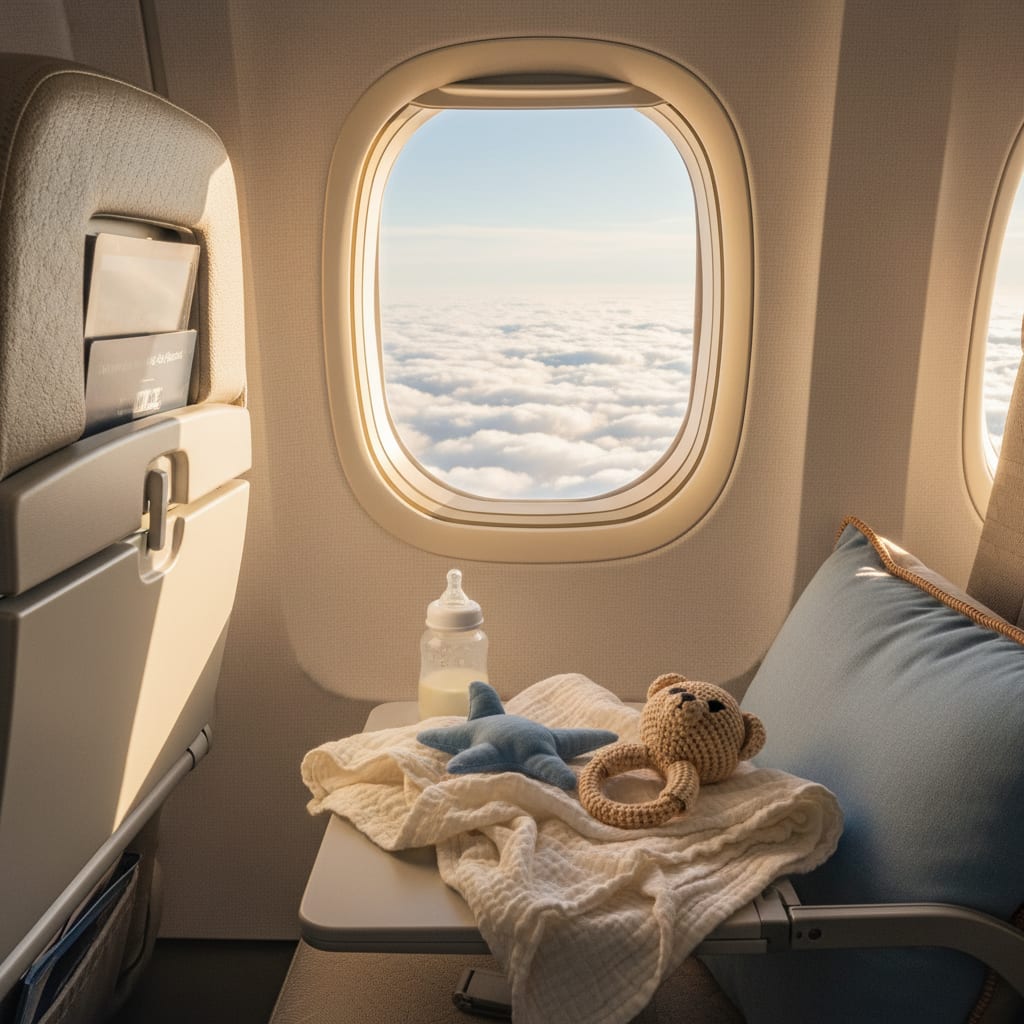
Flying with a baby is a solved problem — not an easy one, but a solved one. The formula: book smart (bassinet rows, nap-friendly departure times), pack a carry-on that assumes delays, feed during takeoff and descent for ear pressure, and treat the whole day as a mission with snacks rather than the start of a relaxing vacation. Do that, and most flights are genuinely fine. Here are the 25 tips that took me from white-knuckled first flight to a person who has changed a diaper in moderate turbulence without spilling her coffee.
Booking: win the flight before you board
- Add the baby to the booking immediately. Lap infants aren’t automatic — call the airline. Showing up with an unticketed baby is a bad start.
- Request the bassinet row on long-hauls the day you book. Bulkhead bassinets are scarce, usually phone-only, and the best free upgrade in family travel.
- Fly your baby’s schedule, not the cheap one. A 6am with a dawn-riser beats a “bargain” 9pm with a baby who melts at seven. On red-eye-length flights, overlap their night.
- Direct beats cheap. Every connection doubles the failure surface: two boardings, two descents, two chances for delays. Pay the difference; it’s therapy money either way.
- Consider buying the seat after your baby is mobile. Pre-crawlers ride laps happily; a 14-month-old on a lap is four hours of wrestling a strong, angry cat.
- Seat strategy for two adults: aisle and window. The middle often stays empty; if it doesn’t, the swap request is granted with visible relief.
The airport: logistics with a side of cardio
- Arrive earlier than feels necessary. Everything — check-in, security with milk, boarding — runs at baby speed.
- Gate-check the stroller in a padded bag. Push it to the door of the plane; it’s your airport survival vehicle.
- Wear the baby through security when you can. Hands free for the bin ballet.
- Declare milk and formula. Reasonable quantities are exempt from liquid rules at US security; allow ten extra minutes for screening.
- Board strategically, not obediently. Two adults: one boards early with the bags, one keeps the baby moving in the terminal until final call. Solo: take the early board and the extra settling time.
- Change the diaper right before boarding. The airport changing table is a palace compared to what awaits at 36,000 feet.
On board: the main event
- Feed during takeoff and descent. Swallowing equalizes ear pressure — breast, bottle, pacifier, or snacks for older babies. Descent matters more; start when you feel the plane begin to drop.
- The muslin is your force field. Nursing cover, blackout tent over the carrier, blanket, spit-up response unit.
- Reveal toys one at a time, slowly. Five toys presented at once is five minutes of entertainment; presented separately, it’s an hour.
- White noise through the chaos. The engine drone helps; a quiet white-noise app in a shirt pocket during walks helps more.
- Accept every offer of help. The grandmother across the aisle genuinely wants to hold the baby while you eat. Let her. She’s done this; you’re doing this.
- The aisle “walk of shame” is neither. Every parent pacing a fussy baby past 30 rows of judgment is performing an ancient and honorable ritual. Nod to the other parent doing laps; you are colleagues now.
- Dress everyone in layers. Cabin temperature is a random number generator.
- Pack yourself real food. A fed parent is a patient parent, and the snack cart schedule bows to no baby.
Descent, landing, and the long walk out
- Start descent-feeding early. Ears hurt most in the last twenty minutes; a baby asleep through descent is a judgment call — many pediatric sources suggest waking for a feed if yours struggles with ear pain.
- Let everyone else deplane first. You’re on baby time now; the overhead-bin scrum is optional.
- Do a seat-pocket sweep. The lovey hides in the seat pocket. It always hides in the seat pocket.
- Build a buffer into arrival plans. No tight connections to hotel check-ins, dinner reservations, or grandparent performances.
- Debrief and forgive. Whatever went wrong, you landed, and the baby has already forgotten it. Write down the one thing you’d change; that note becomes next trip’s superpower.
Deep-dive companions: the carry-on packing list for what goes under the seat, and the sleep-protection guide for landing in a new time zone without wrecking the week.
FAQ: flying with a baby
Do babies’ ears hurt on planes?
Pressure changes can bother little ears, mostly during descent. Feeding, a pacifier, or anything that makes them swallow helps equalize the pressure. Most babies fuss briefly or not at all — and a baby with a heavy cold is worth a pre-flight pediatrician call.
What’s the best time of day to fly with a baby?
Match the flight to their best stretch: for most babies, mid-morning after the first nap. For long-hauls, overnight flights that overlap their normal night typically produce the most sleep for everyone.
Is a bassinet row worth it?
On any flight long enough to include a night’s sleep, absolutely — it frees your arms for hours. Note the weight and age limits, and know that bassinets usually can’t be used during turbulence.
What if my baby cries the entire flight?
It almost never happens — crying comes in waves, not four-hour arcs. Work the checklist (food, diaper, temperature, motion), walk the aisle, and remember: a plane is the one place where literally everyone hopes your baby falls asleep.