International Travel With a Baby: Step-by-Step Guide
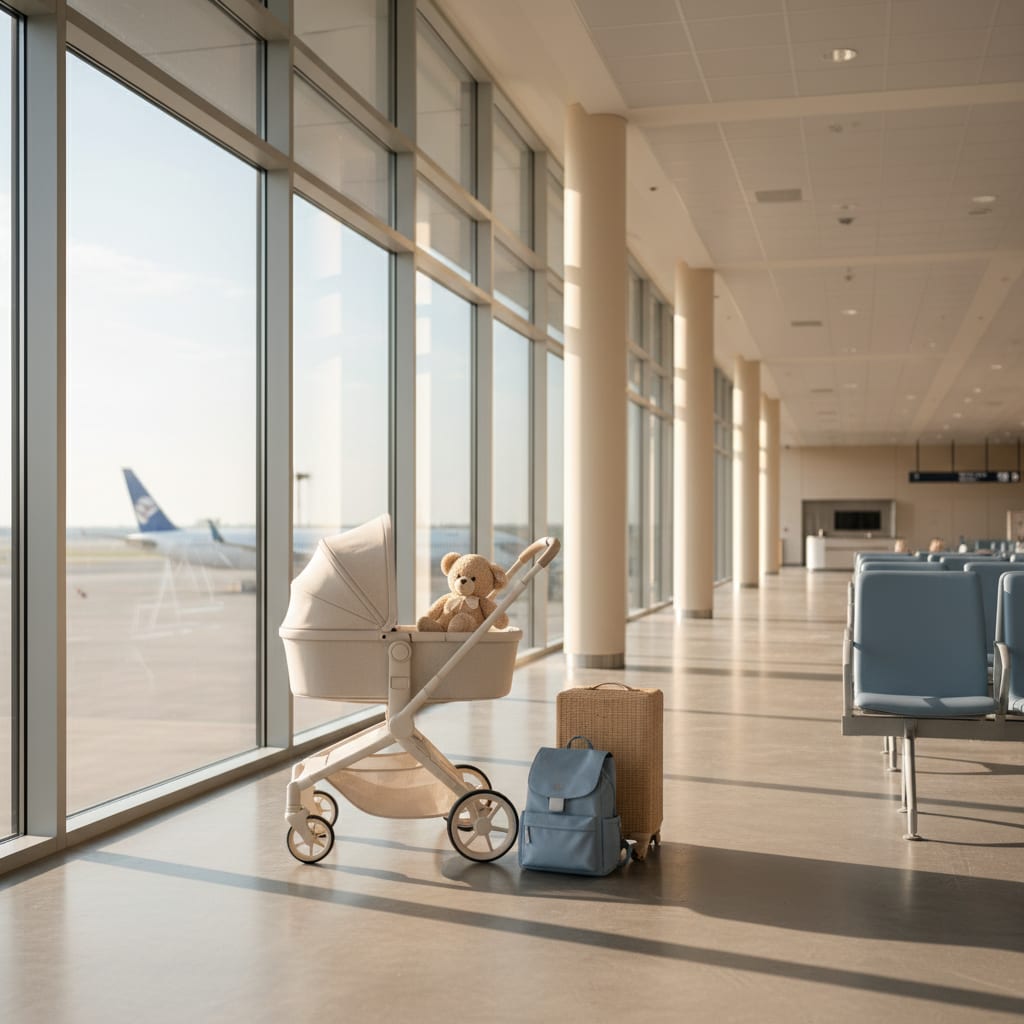
International travel with a baby comes down to a sequence: get the passport first (it drives your whole timeline), book the baby onto your ticket as a lap infant or in their own seat, choose a destination that forgives short attention spans, then manage jet lag with a plan matched to your baby’s age. None of it is hard; all of it punishes improvisation. Here’s the step-by-step process we’ve refined over multiple stamps in two very small passports.
Step 1: the baby passport (start here, start early)
Yes, babies need their own passport — even a two-week-old. For US applications, both parents generally need to appear in person with the baby (or provide notarized consent), and you’ll need the birth certificate plus a compliant photo of a person who cannot yet hold up their own head. The photo is the comedy portion of the process: lay the baby on a white blanket, shoot from above, accept that attempt one through nine will feature closed eyes.
Processing typically takes several weeks — longer in busy seasons — and expedited options exist for a fee. Book the trip after the passport arrives, or at least after it’s safely in processing. Also check whether your destination requires the passport to be valid several months beyond your travel dates; many do.
Step 2: tickets — lap infant or own seat?
Under two, you choose:
- Lap infant. On international flights this is typically around ten percent of the adult fare plus taxes — not free, unlike domestic. The baby must be added to the booking; call the airline.
- Own seat. Full logistics of the car seat on board, but everyone may actually sleep. Worth serious consideration on flights over eight hours or with a baby who’s crawling.
If you go the lap route on a long-haul: request a bassinet row the moment you book. Bulkhead bassinets are limited, unbookable-online on many carriers, and the single best free upgrade in family travel. More cabin strategy in my flying with a baby tips.
Step 3: choose a forgiving destination
For a first international trip, optimize for three things: manageable flight time, a small-ish time difference, and a culture where babies in restaurants raise zero eyebrows. From the US East Coast, that shortlist looks like the Caribbean, Mexico, Portugal, Spain, and Italy; from the West Coast, Mexico and Hawaii (domestic, but long-haul practice). Save the twelve-hour epics for the golden age windows — or for trips with grandparental reinforcements.
Step 4: vaccinations and health prep
Six to eight weeks before departure, book a pediatrician visit specifically about the trip. Bring your destination and dates: your doctor may adjust the routine vaccination schedule, recommend destination-specific protection, or advise on timing. I’m deliberately not giving medical specifics here because the right answer depends on your baby’s age, your destination, and current guidance — this is precisely what your pediatrician is for. While you’re there, ask what to do about fevers abroad and pack their advice, literally, in writing.
Also sort travel insurance that explicitly covers the baby, and photograph every document — passports, insurance, vaccination records — into a cloud folder both parents can reach.
Step 5: jet lag, by age
The good news: babies under about three months barely have a circadian rhythm to disrupt — feed on demand, sleep on demand, and they’ll drift to local time within days. The honest news: from around four months, jet lag is real and arrives on a schedule of its own choosing.
What works, roughly by age:
- Under 3 months: nothing to manage. Follow the baby.
- 3–12 months: shift toward local time immediately — meals and naps at local hours, hard daylight exposure in the morning, dim boring rooms at night. Expect two to four rough nights eastbound, fewer westbound.
- Toddlers: same playbook plus patience. The 4am party appearance is traditional; keep lights low, interaction minimal, and it fades within a few nights.
Protecting sleep infrastructure — familiar sleep sack, white noise, a portable routine — does more than any clever scheduling trick.
Step 6: the arrival-day rules
Land, get outside into daylight, keep the baby awake through a normal-ish local afternoon if you can do so without cruelty, and aim everyone at an early local bedtime. Book nothing for day one beyond “find groceries, find the playground, survive charmingly.” The trip starts on day two.
If this is also your first trip ever with the baby, read the newborn survival guide first — documents and feeding logistics are the same muscles, just with a passport stapled on.
FAQ: international travel with a baby
Does my baby really need a passport?
Yes — every international traveler needs one, no matter how small. Infant passports typically have shorter validity than adult ones, so check the expiration before each subsequent trip; babies burn through passports faster than shoes.
How much does a lap infant cost internationally?
Typically around ten percent of the adult fare plus taxes and fees, though it varies by airline and route. You’ll also want to confirm the baggage allowance — most carriers let lap infants bring a checked stroller and car seat free.
What’s the best flight time to book with a baby?
For long-hauls, overnight flights that overlap the baby’s normal night usually win — they sleep, you pretend to. For shorter hops, mid-morning flights after the first nap tend to hit the happiest stretch of the day.
How long does baby jet lag last?
A common rule of thumb is up to a day of adjustment per time zone crossed, but most babies settle in two to four nights with consistent local-time meals, naps, and morning daylight. Eastbound is usually harder than westbound.