First Vacation With Baby: What to Book and When
Plan a first trip with a baby in this order: pick the dates first, the format second, and the destination last. Aim for the pre-crawling window if you can, book four to six nights in one place with a door between you and the baby, confirm a real crib in writing, and sort the paperwork before you book anything non-refundable — a lap infant still needs documents, and an international baby needs their own passport. Get that sequence right and almost any destination works. Get it backwards and the perfect destination still falls apart.
Get the dates right before anything else
The single biggest lever on a first trip is when, not where. There is a well-documented sweet spot roughly between three and nine months, after the newborn fog and before crawling, when a baby is portable, nap-flexible and content to watch the world from a carrier. They cannot escape, they are not yet bored, and they are usually still free on your lap. The full case for it — and what changes either side of that window — is in best age to travel with baby.
If you have missed it, you have not missed your chance; you have just changed the job. An eighteen-month-old needs a trip built around running space and a pool, not around a stroller and a café.
Length: four to six nights. Long enough that the travel days amortize, short enough that you are home before the laundry situation becomes structural. A single weekend with a baby is all packing and no payoff — two travel days out of three, and you arrive home more tired than you left.
One base, always. Every accommodation change costs a night of sleep. A multi-stop first trip is the most common self-inflicted wound in family travel, and it is the one people describe afterwards as “we’re not doing that again for years”.
Fly or drive? Ask what your baby already tolerates
Whichever transport your baby currently survives is the right answer. A baby who screams for the last twenty minutes of every car journey will not enjoy six hours of highway; a two-hour flight might genuinely be easier. A baby who sleeps the moment the engine starts should be driven.
If it is a genuine toss-up, drive. You control every stop, the car carries the entire nursery with no packing triage, and nothing about it is time-pressured.
If you fly, book the flight around the day rather than around the fare. A morning departure with a baby is usually better than a cheap evening one, because an overtired baby in a metal tube at 8pm is a different animal from the same baby at 9am — and because a delay in the morning still leaves your day intact.
The paperwork, which is the part people leave too late
Domestic US flights. A child under two can usually fly free on a parent’s lap, but “free” is not “unregistered”: the baby must be added to the booking, and airlines generally ask for proof of age at check-in. A birth certificate or immunisation record in the bag settles any argument at the desk. Under-18s are not required to show ID themselves.
International flights. Every child needs their own passport, newborns included, and there is no version of this you can improvise at the airport. Apply as early as you reasonably can — processing times move, and a first-time infant passport typically requires both parents to appear in person, which is its own scheduling problem. Lap infants abroad usually pay a percentage of the adult fare plus taxes rather than flying free, so price it before you assume.
Travelling without the other parent. Carry a signed consent letter from the absent parent with their contact details. It is rarely asked for and it is unpleasant to be without.
The whole seat-versus-lap decision — what you give up, the oxygen-mask seating restriction, and where the car seat goes — is covered properly in flying with a lap infant, including the rules that are airline policy rather than law.
What to actually book
Book the layout, not the upgrade. Four things decide whether the trip works:
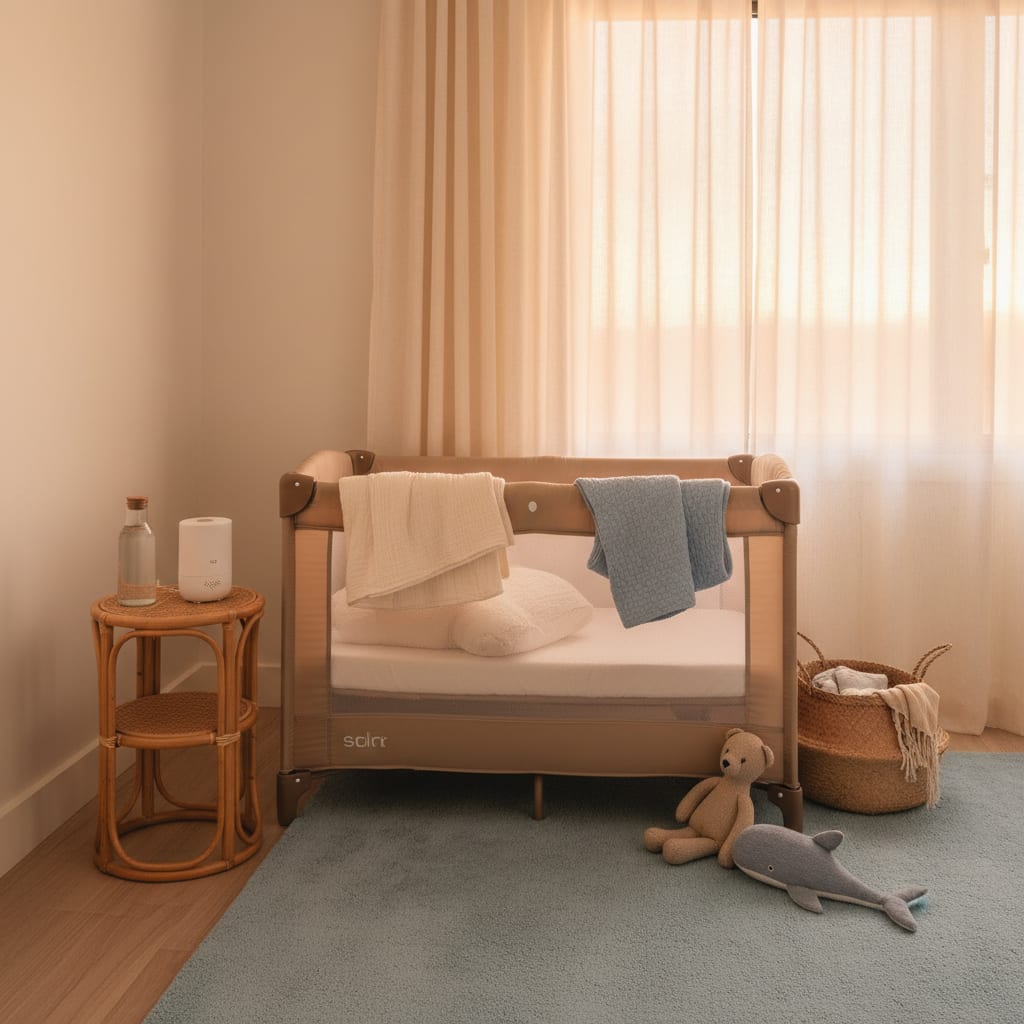
- A real crib, confirmed in writing. Not “we can usually arrange one.” Ask what it is — abroad, a “cot” is often a travel cot with a thin mat — and bring your own sheet either way.
- Somewhere dark for the baby to sleep that is not the room you are sitting in. A one-bedroom rental, a suite, a balcony with a door that closes. This is the biggest single quality-of-trip variable and, outside high season, it costs less than people expect.
- Laundry. In-unit or in-building. It halves the suitcase before you leave home.
- Refundable rates. Babies get ear infections a fortnight before departure. In year one, pay the small premium.
If you are booking a resort rather than a rental, ask one extra question that most families forget: is there any childcare for under-threes? Kids clubs overwhelmingly start around four, so the answer is usually no — and it is better to know that before you have paid for the fantasy of an afternoon off.
What to leave at home, and what to leave out of the itinerary
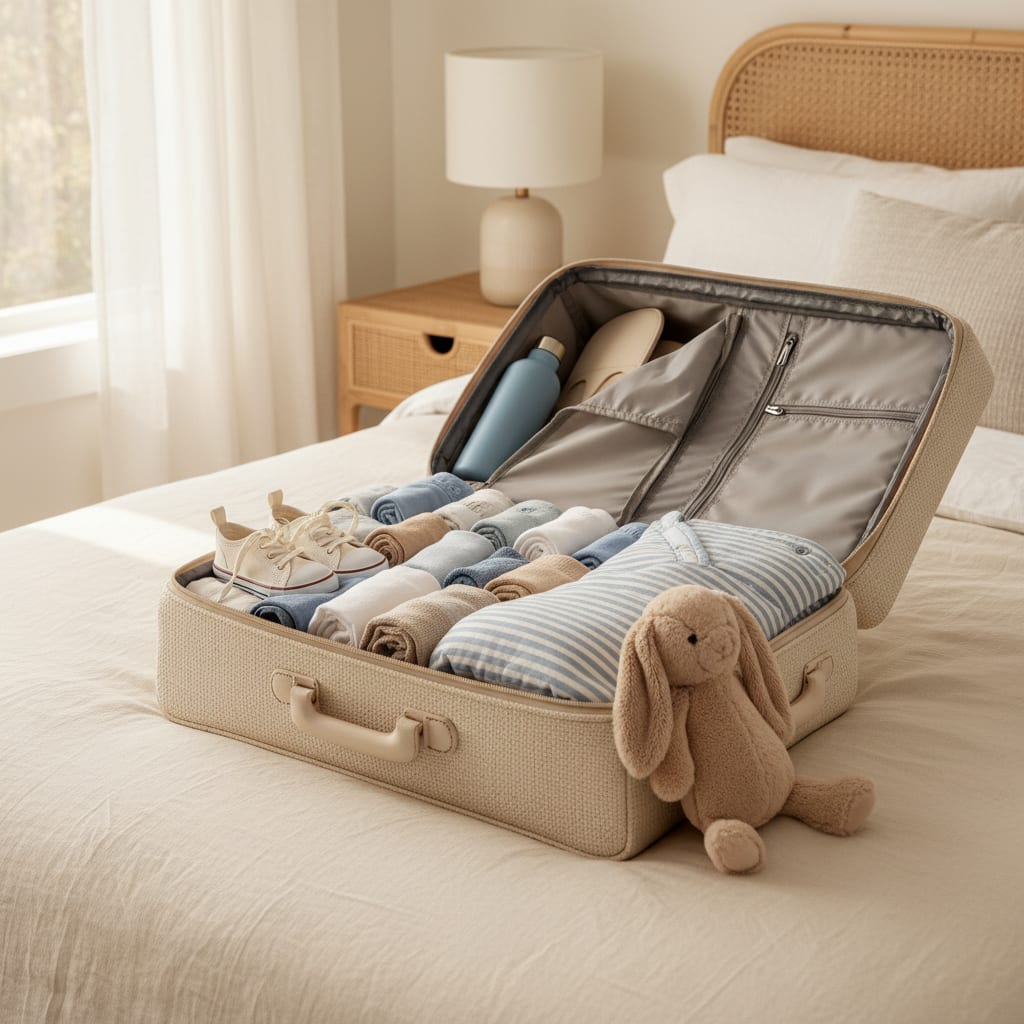
Pack from a list rather than from anxiety — the difference is roughly one entire suitcase, and the version I actually use is the baby travel packing list. Rent or buy at the destination anything bulky and cheap: a stroller can be worth flying with, a bath support is not.
Then plan half of what seems reasonable. One anchor activity a day, maximum, and nothing at all scheduled for the first morning after you arrive. The trip is not a shorter version of your old holidays; it is a different shape, and the families who enjoy it are the ones who stop fighting the shape by about day two.
Now pick the destination
Once the dates, the length and the format are decided, the destination is the easy part — and it should be chosen to match the format rather than the other way round. The eighteen places that are genuinely easy with a baby, grouped by drivable base, full-service resort and gentle walkable city, are in best vacations with a baby.
One question settles it faster than any list: what do you, the parents, need in order to feel human? Warmth and zero decisions points at a resort. Stimulation and good coffee points at a small walkable city. Silence and a view points at a cabin. The baby, honestly, is happy anywhere the milk is.
FAQ: your first vacation with a baby
How long should a first trip with a baby be?
Four to six nights in one place. Shorter and the travel days dominate; longer and you are running a household in an unfamiliar kitchen. If you are nervous, make the first one drivable so that a disastrous night costs you nothing but a drive home.
Is an all-inclusive resort a good first vacation with a baby?
It is arguably the best one. Meals, snacks, pools and often a crib are all within a five-minute walk of your room, so every failure point a new parent worries about has been pre-solved by somebody else. Confirm the crib and ask about shaded pool areas.
Should our first trip be a flight or a road trip?
Whichever your baby already tolerates. If it is a toss-up, drive — you control every stop and the car carries everything. Save the flight for the second trip, when you know more about how your baby travels.
What should I not do on a first baby vacation?
Don’t itinerary-stack, don’t book a multi-city route, and don’t schedule anything for the first morning after arrival. And don’t buy a whole new travel wardrobe for a person who will wear the same four outfits all week.
Does a baby need a passport for a first international trip?
Yes — every child needs their own passport from birth, and it cannot be improvised at the airport. Start the application before you book anything non-refundable, and check whether both parents need to attend in person where you live.