Savannah With Kids: A Slow Southern Weekend
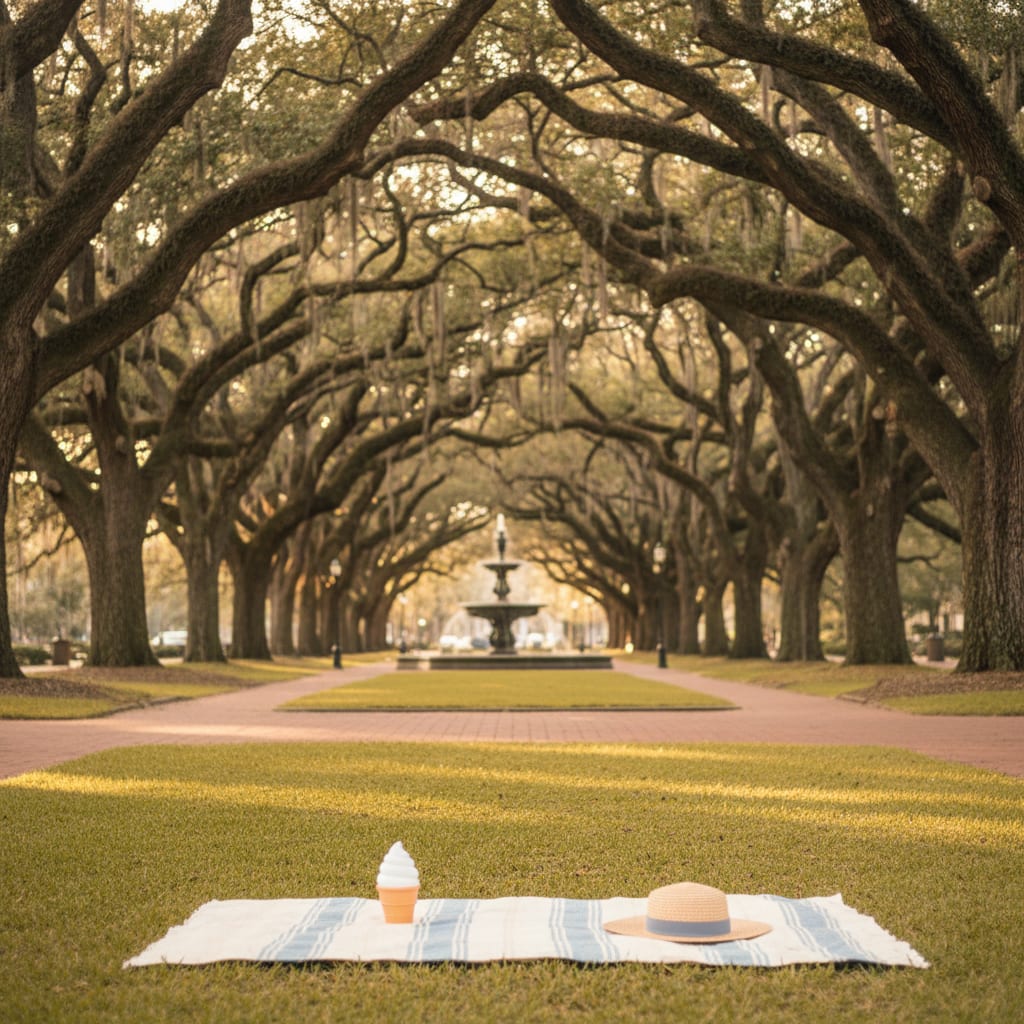
The short answer: Savannah is the easiest historic city in America to do with kids, because the whole downtown is basically a chain of small parks. Twenty-two shaded squares, spaced every couple of blocks, mean a built-in break whenever anyone flags — fountains, live oaks, Spanish moss, benches. Add a paddlewheel riverboat, an ice-cream institution, and a real beach twenty minutes away on Tybee Island, and you have a slow, sweet weekend that never asks a child to behave in a museum. Here’s the plan, by age.
Know before you go
The squares are the infrastructure. Savannah’s historic district is a flat, walkable grid where a leafy square interrupts you every two blocks or so. This is the secret to doing a “historic walking city” with small kids: nobody ever has to make it more than a couple hundred yards to the next shady stop. Bring the stroller; the brick sidewalks are bumpy but manageable.
River Street is cobblestones. The riverfront strip is fun — ships, candy shops, the riverboat dock — but its cobblestones and steep historic ramps are genuinely hostile to strollers. Use the elevator and stairs near the plaza end, carry the little one, or park the stroller up top.
Tybee is part of the trip. Tybee Island, Savannah’s beach town, is roughly a 20–30 minute drive. Locals treat it as the second half of any family visit; you should too.
When to come: March–May is peak gorgeous (azaleas, mild heat) and October–November is the calm, golden version. Summer is hot and humid — squares and beach mornings help, but plan pool time. St. Patrick’s Day week is Savannah’s giant party; avoid it with young kids unless parades are the goal.
Savannah by age
With a baby (0–2): Forsyth Park and square-hopping
Forsyth Park is the anchor: the famous fountain for the photo, huge lawns, mature shade, a good playground and a Saturday farmers market. Then simply square-hop north through the district — Monterey, Madison, Chippewa — at whatever pace the nap schedule allows. Leopold’s Ice Cream, scooping since the 1920s, is the daily ritual (yes, even for the parents of a baby — especially for them). If sleeping in a strange room is the part you’re dreading, my baby sleep while traveling guide has the routine that saves the weekend.
With a toddler (2–5): fountains, the riverboat and a beach morning
Add the Ellis Square splash fountain — flat jets kids run through all summer, next to the City Market pedestrian zone where street musicians play. The riverboat cruise on a paddlewheeler is toddler catnip: an hour on the water, big paddle wheel turning, container ships sliding past improbably close. A Tybee Island morning rounds it out — the south end has gentle, shallow water at low tide and a pier for walking. Trolley tours technically work at this age, but a toddler’s tolerance is one loop, no stops.
With big kids (5+): pirates, forts and the lighthouse
Now Savannah’s spookier, saltier side pays off. Climb the Tybee Island Light Station (a real lighthouse with a real spiral staircase and a keeper’s cottage), then poke around Fort Pulaski between Savannah and Tybee — moat, drawbridge, cannon demonstrations in season, and walls still scarred by Civil War shellfire, which lands with kids in a way plaques never do. In town, the pirate lore around the historic taverns delights the 6–10 crowd, and Wormsloe’s mile-long avenue of oaks is the drive-through jaw-dropper. Evening ghost trolleys work from about ten up — Savannah takes its haunts seriously.
What’s skippable
House-museum tours with under-10s — beautiful, slow, and full of things not to touch. A ghost tour too young — it’s the city’s signature, but save it for double digits. River Street candy-shop marathons — one praline sample stop is charm; four is a meltdown with a sugar delivery system. Squeezing Savannah into a half-day from Charleston — the two-hour drive each way eats the day; stay the night.
Where to stay
The Historic District is the move — this is a city where location is the experience, and being able to walk out into the squares before breakfast is worth the premium. Aim for the southern half near Forsyth Park for quieter nights. If you would rather have a kitchen and a washing machine than a lobby, The Ann Savannah is an apartment-style stay inside the historic grid, with family units and a seasonal pool. Tybee Island is the alternative base in summer: a beach-house rhythm with historic-district day trips. The mid-priced chains along the highway save money but strand you in traffic; with kids, the whole point is rolling out of bed into the oaks.
A realistic weekend itinerary
Day 1: Forsyth Park and playground early, square-hop north with a Leopold’s stop, Ellis Square fountain afternoon, City Market dinner with street music. Day 2: riverboat morning, nap/pool break, River Street amble (stroller parked up top) and sunset on the water. Day 3: Tybee — lighthouse and Fort Pulaski for 5+, beach-and-pier morning for littles. Savannah and Charleston with kids are a natural one-week pair — two hours apart, beaches on both ends. If you’re building a bigger southern swing, New Orleans with kids brings the music and beignets, and Nashville with kids rounds out the trio.
FAQ: Savannah with kids
Is Savannah worth visiting with kids?
Yes — arguably the easiest historic city in the country for families, because the squares give you a shaded park break every two blocks and Tybee Island adds a real beach 20–30 minutes away.
How many days do you need in Savannah with kids?
Two nights covers the squares, the riverboat and Tybee. Three is comfortable. Many families pair it with Charleston, two hours north, for a full southern week.
Is Savannah stroller-friendly?
Mostly. The historic grid is flat and walkable with bumpy-but-fine brick sidewalks, and every square is a break stop. River Street’s cobblestones and steep ramps are the exception — use the elevator by the plaza or carry little ones down.
When is the best time to visit Savannah with kids?
March–May for azaleas and mild warmth, October–November for calm golden weather. Summer works with fountain mornings and Tybee afternoons; skip St. Patrick’s week with small kids unless you’re going for the parades.