Yellowstone With Kids: A Realistic Family Plan
The short answer: Yellowstone absolutely works with kids — if you plan it like three small trips instead of one big one. The park is enormous, the drives between famous sights take real hours, and the two rules that matter (stay on the boardwalks, keep serious distance from wildlife) are non-negotiable with small children. Base yourself in one area for a couple of nights, do one headline sight per day at nap-friendly hours, and let bison jams and roadside elk be the entertainment they genuinely are. Here’s the realistic version, by age.
Safety with kids: the part to read twice
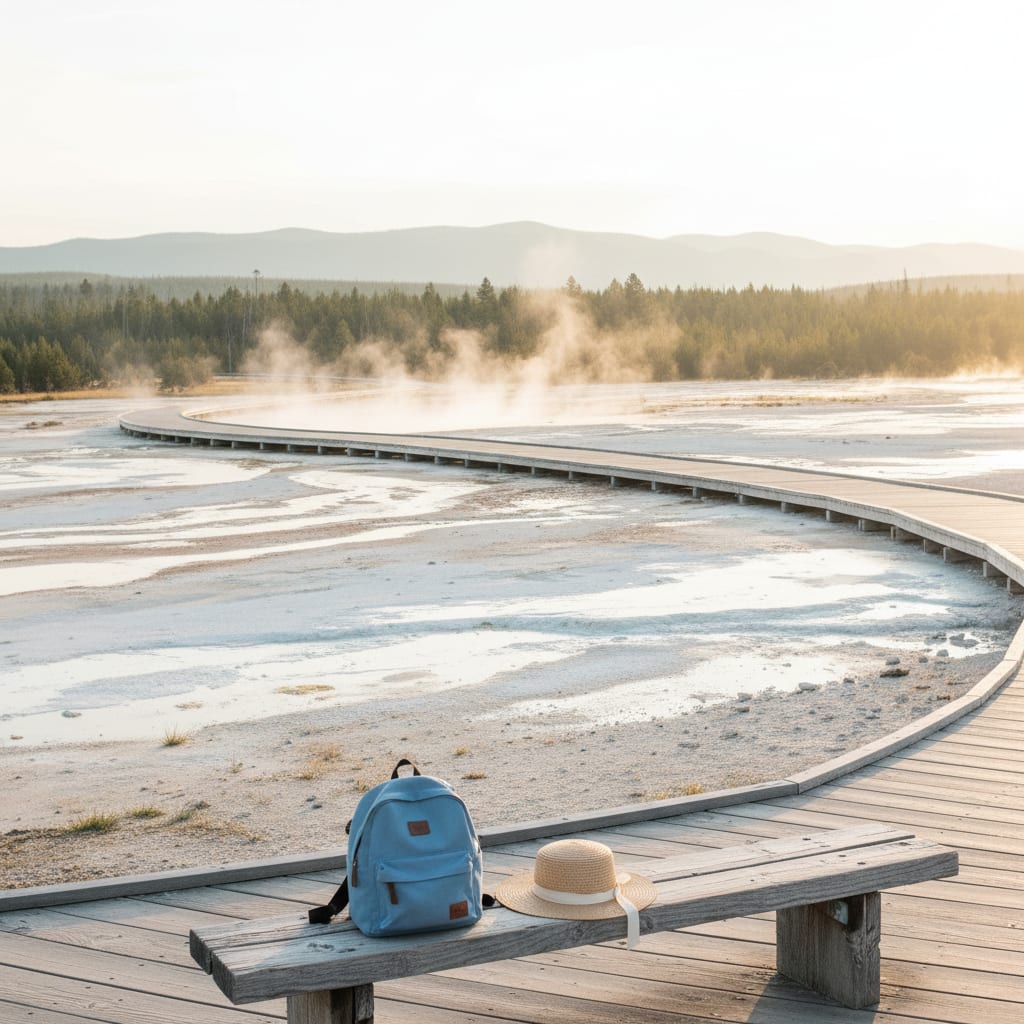
Thermal areas are boardwalk-only, hands held. The ground around geysers and hot springs can be a thin crust over scalding water, and the pools themselves are dangerously hot. Kids stay on the boardwalk, inside the railings, holding a hand in the busy sections — no exceptions, no “just one photo.” A carrier beats a stroller in the smaller basins; the big ones (Old Faithful, Grand Prismatic’s main boardwalk) are stroller-manageable.
Wildlife distance is a hard rule. The National Park Service requires staying roughly 25 yards from bison and elk and roughly 100 yards from bears and wolves — and bison, which look placid and wander right through parking lots, injure visitors who get close. Watch from the car in a bison jam; never send a child closer for a photo.
Distances are the hidden difficulty. Yellowstone’s figure-eight road system covers a huge area, and popular legs can take an hour or two each way before you add construction and animal traffic. Two areas per day is ambitious; one is sane.
Check current NPS rules before you go. Entrance fees, road openings, construction closures and any reservation requirements change season to season — verify everything on the official NPS Yellowstone pages the month you travel. Most family visits happen June through September; many park roads close to cars outside roughly May–October.
Yellowstone by age
With a baby (0–2): one basin, one lake, lots of car naps
Structure days around drives (naps) and short boardwalk loops (awake time). Old Faithful works even at this age — eruption predictions are posted at the visitor center, typically an hour-plus apart, so time your arrival rather than camping out. Add the West Thumb Geyser Basin, a compact boardwalk right on Yellowstone Lake, and low-key lakeshore time. A back carrier is the single best piece of gear you’ll bring; my baby sleep while traveling guide covers surviving the cabin-and-lodge sleep chaos.
With a toddler (2–5): geysers as magic, bison as theater
Toddlers are the ideal geyser audience — steam, rumbling, eruption, delight. Do Old Faithful plus a wander of the surrounding Upper Geyser Basin’s smaller, constantly-burbling features, then the Fountain Paint Pot loop, a short boardwalk with mudpots that gurgle like cartoon cauldrons. Drive Hayden Valley at dusk for near-guaranteed bison from the safety of the car. Keep hikes to boardwalks and flat lake edges; this is not the trip for ambitious trails, and the reins-level hand-holding in thermal areas is real work at this age — two adults per toddler is the honest ratio.
With big kids (5+): Junior Ranger badges and the Grand Canyon of the Yellowstone
The Junior Ranger program is the spine of the trip now — pick up the booklet at any visitor center, complete activities as you go, and finish with a ranger swearing-in kids take seriously. Add the Grand Prismatic Overlook (a short uphill walk from the Fairy Falls trailhead for the postcard view of the rainbow spring), Mammoth Hot Springs’ terraced staircase boardwalks, and the Grand Canyon of the Yellowstone, where Artist Point delivers the waterfall view that ends up framed in the hallway. Early-morning wildlife drives in Lamar Valley — the park’s wolf-and-bison serengeti — are worth one alarm-clock sacrifice.
What’s skippable
Trying to drive the full figure-eight in a day — you’ll see windshield, not park. Long backcountry hikes with under-8s — the boardwalk sights are the show; save the mileage for a future trip. A rigid geyser-eruption schedule — beyond Old Faithful, predicted geysers keep their own clocks; treat any other eruption you catch as a bonus. Late-afternoon arrivals at Old Faithful in July — parking fills; go before 10 or after 5.
Where to stay: inside vs outside the park
Inside the park (the Old Faithful area, Canyon and Lake villages, Mammoth) wins on time — you’re already there for the quiet mornings and dusk wildlife hours — but in-park lodges and cabins book out far ahead and skew rustic. West Yellowstone, just outside the west entrance, is the practical family base: normal hotels with pools, restaurants, groceries, and the closest gateway to the geyser basins; the Best Western Desert Inn is a plain version of the type, family rooms and an indoor pool, which after a cold morning at the geysers is the whole afternoon solved. Gardiner (north entrance) suits a Mammoth-and-Lamar wildlife focus. With kids, two nights minimum per base; if you can only get one in-park night, spend it near Old Faithful.
A realistic three-day itinerary
Day 1 (geysers): Old Faithful early using the posted prediction, Upper Geyser Basin wander, Fountain Paint Pot on the way out, pool afternoon. Day 2 (canyon and lake): Artist Point in the morning, picnic and lakeshore at West Thumb, Hayden Valley bison at dusk. Day 3 (north loop, 5+): Mammoth terraces, Lamar Valley drive, Junior Ranger swearing-in. Yellowstone pairs naturally with a Grand Canyon South Rim trip as the other great American park families grow up on — and since getting here is a road trip whatever you do, my road trip with kids survival guide is the companion piece.
FAQ: Yellowstone with kids
Is Yellowstone safe for toddlers?
Yes, with supervision that never switches off: boardwalk-only in thermal areas, hands held near railings, and wildlife watched from the car or the legal distance. The dangers are real but entirely avoidable by following posted rules.
How many days do you need in Yellowstone with kids?
Three full days covers the geysers, the canyon and one wildlife valley at kid pace. Two works if you stay west and focus on geyser basins. One day is a drive-through, not a visit.
When is the best time to take kids to Yellowstone?
June through early September for full road and facility access, with warm days and cold mornings. Early June and late August trim the crowds. Check current NPS pages for exact seasonal openings — they shift year to year.
Do you need reservations for Yellowstone?
In-park lodging and campgrounds book many months out, and entrance or road rules can change — check the current NPS Yellowstone site for this season’s requirements before locking in dates.