Grand Canyon With Kids: South Rim Survival Guide
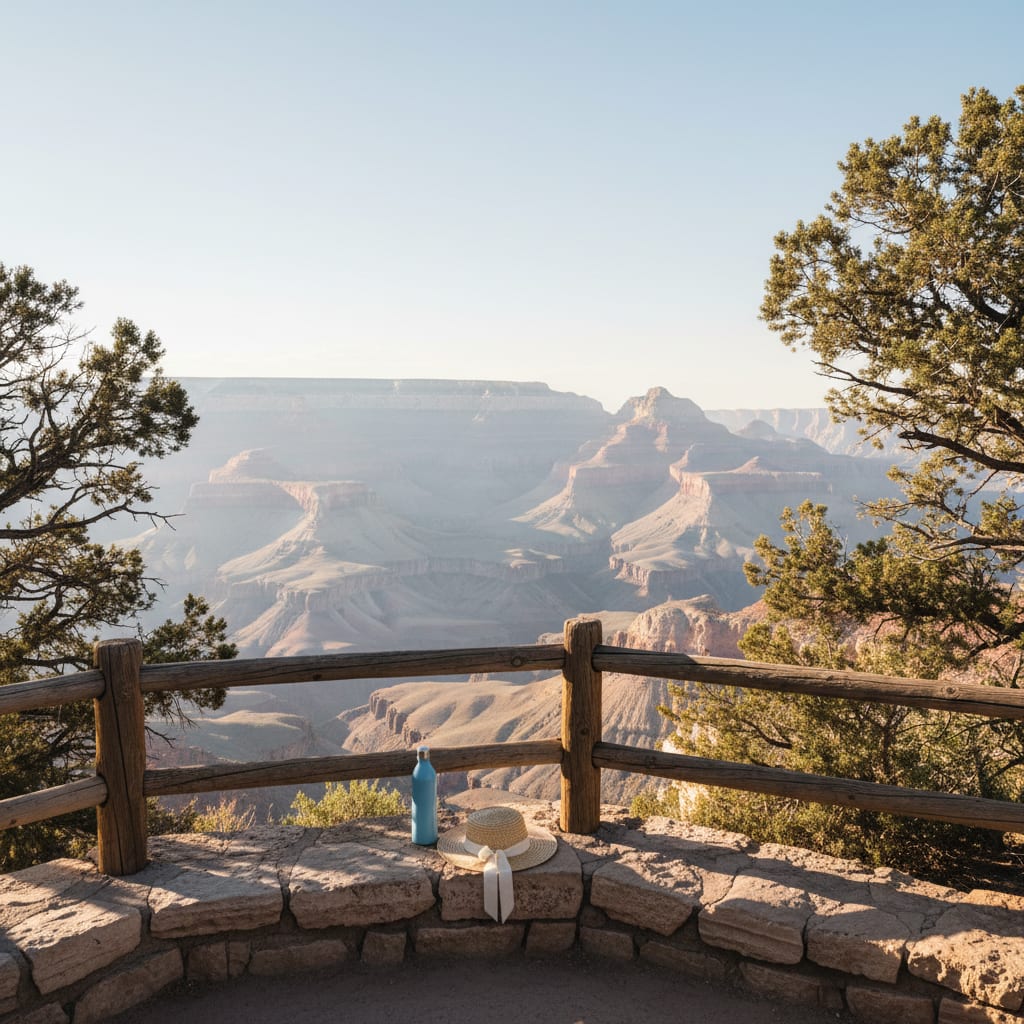
The short answer: the South Rim is very doable with kids — the trick is managing the edge, the altitude and your own ambitions. The busy viewpoints are railed, the Rim Trail has long paved stroller-friendly stretches, and the free shuttle system means nobody hikes farther than they want to. The rules that keep it calm: hands held or carrier-strapped near every edge, no big descents into the canyon with young kids, and one great sunset instead of ten rushed viewpoints. Here’s the honest plan, by age.
Safety with kids: the rail-guard talk, honestly
Yes, there are railings — mostly. The developed viewpoints at Mather Point, the Village and along Hermit Road are fenced. But long stretches of the Rim Trail between them are not, and the drop is immediate. The working system: kids under about six ride in a carrier or hold a hand within several yards of the rim, full stop; older kids get the “two big steps back from any edge, always” rule and lose rim privileges if they test it. Parents who set this on day one relax and enjoy the trip; parents who don’t spend it lunging.
Going below the rim is a different sport. Trails like Bright Angel descend fast, and every step down must be climbed back up at elevation — the rim sits at roughly 7,000 feet, where everyone tires faster and sunburn comes quicker. With kids, a short taste — down to the first tunnel on Bright Angel and back — is plenty. Never aim for the river and back in a day; the park warns against it for fit adults, let alone families.
Heat, water, squirrels. Below the rim gets dramatically hotter than the top. Carry more water than feels reasonable, hat everyone, and don’t let kids feed the rock squirrels — they bite, and they’re the park’s most common animal incident.
Check current NPS rules. Entrance fees, shuttle schedules, seasonal road closures (Hermit Road is shuttle-only much of the year) and any reservation programs change — verify on the official NPS Grand Canyon pages the month you travel.
The South Rim by age
With a baby (0–2): rim strolls and one perfect sunset
Keep the radius small. The paved Rim Trail between Mather Point and the Village is flat, fenced at the busy sections, and stroller-easy — one direction walking, the free shuttle back. Time the day around a late-afternoon feed so you’re parked at a railed viewpoint for sunset, when the canyon turns every color it owns. The elevation makes littles sleepy and parents winded; treat that as a feature and keep the schedule soft. My baby sleep while traveling guide covers the strange-room nights.
With a toddler (2–5): shuttles, short walks and the “two big steps” rule
Toddlers love the shuttle buses almost as much as the canyon — lean into it. Ride Hermit Road hopping off at two or three railed viewpoints, do the Rim Trail in 20-minute fenced segments, and spend the hot midday at the Visitor Center film and the Village lawns. A carrier remains essential near the rim; this is the age where the edge rule is enforced physically, not verbally. The Yavapai Geology Museum has huge windows framing the canyon from safely indoors — the best viewpoint in the park for a squirmy two-year-old.
With big kids (5+): Junior Ranger badges and a taste of the trail
Now the canyon becomes an adventure instead of a view. The Junior Ranger program (booklet from any visitor center, badge from a ranger) structures the whole visit. Add a short, supervised descent on Bright Angel Trail to the first tunnel and back so they can say they hiked into the Grand Canyon, a ranger talk at the geology museum, and the Desert View Drive east to the historic Watchtower, whose spiral stairs and viewing deck are a kid-magnet. Sunset at Hopi Point via shuttle is the grand finale from about age six, when the “two big steps” rule holds without enforcement.
What’s skippable
The rim-to-river fantasy — not with kids, not in a day, not in summer. Ten viewpoints in an afternoon — after three, they genuinely blur; pick one east, one west, one sunset. Helicopter tours with young children — expensive, loud, and the view from Yavapai’s windows lands nearly as hard at this age. Skipping the shuttle to keep the car — parking at popular viewpoints fills by mid-morning in season; the shuttle is the stress-free version.
Where to stay
Inside the park at Grand Canyon Village is the winner if you can get it — sunset and sunrise on foot, no gate line — and it books out far in advance. Tusayan, just outside the south entrance, is the practical fallback: family hotels with pools, seven miles from the rim — Holiday Inn Resort The Squire at Grand Canyon is the one built for exactly this job, with an indoor pool, a bowling alley and an arcade for the afternoon when nobody wants another viewpoint. Williams, about an hour south, adds the Grand Canyon Railway — a vintage train to the rim that turns the transfer into the attraction, and a legitimately great move with train-obsessed kids. Flagstaff works as a base only if you’re touring the region more broadly.
A realistic two-day itinerary
Day 1: arrive midday, Visitor Center and Mather Point, flat Rim Trail stroll toward the Village, early dinner, sunset at a railed viewpoint. Day 2: Bright Angel taste-hike or Hermit Road shuttle morning, Yavapai museum midday, Desert View Drive and the Watchtower afternoon, Junior Ranger badge ceremony before closing. If your family is collecting the great western parks, Yellowstone with kids is the natural sibling trip — and since the South Rim is a drive from everywhere, my road trip with kids guide covers the getting-there hours.
FAQ: Grand Canyon with kids
Is the Grand Canyon safe for young kids?
Yes, with the edge managed deliberately: developed viewpoints are railed, kids under about six stay in a carrier or hand-in-hand near the rim, and everyone follows a “two big steps back” rule. The dangers are real but avoidable with rules set on arrival.
Can you do the Grand Canyon with a stroller?
The Rim Trail’s central stretch between Mather Point and the Village is paved and stroller-friendly, and shuttles carry folded strollers. Below the rim, no — that’s carrier territory, and only for short distances.
How many days do you need at the South Rim with kids?
Two days is the sweet spot: one for the central rim and sunset, one for a taste-hike and Desert View. A single day works but skip nothing-extra; three lets you add ranger programs at real kid pace.
What is the best age to take kids to the Grand Canyon?
Every age works for the view; six and up is when it becomes a trip they’ll remember — old enough for the edge rules, the Junior Ranger badge and a short Bright Angel descent. Under three, keep it to railed viewpoints and rim strolls.