Best Kids Travel Pillow for Planes & Car Naps
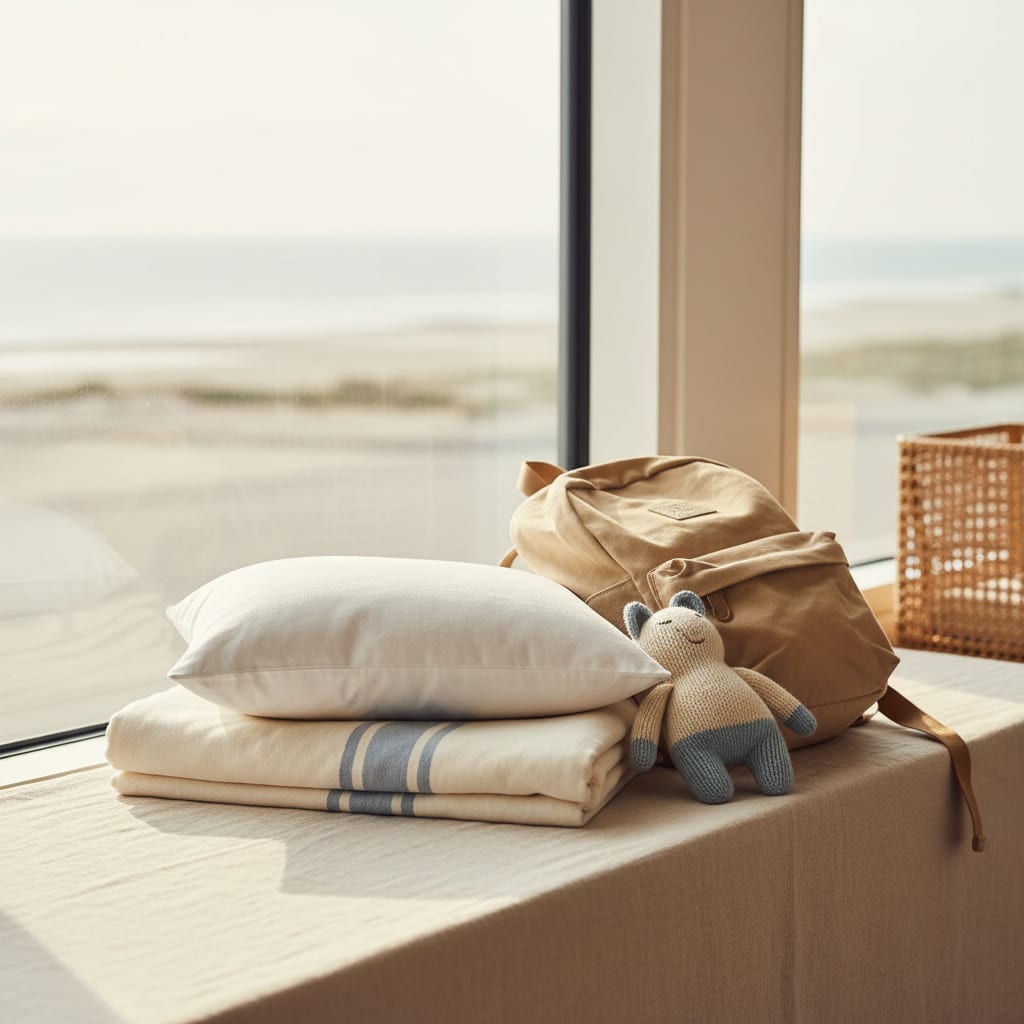
The best kids travel pillow depends on where your child will actually be sleeping: for lying flat in a hotel bed, a bunk or a lie-flat seat, a small real pillow like Lincove’s Down and Feather Travel Pillow wins every time; for sleeping upright in an economy seat or a car seat, you want a chin-support pillow like the BCOZZY Kids, not a horseshoe. Buy for the sleeping position, not the packaging. Here’s the shortlist.
If you buy through links on this page we may earn a commission, at no extra cost to you. Nobody tells us what to recommend.
Two completely different products share one name
This is the confusion that makes parents buy the wrong thing. “Kids travel pillow” covers two categories that solve opposite problems:
- A small flat pillow — a real pillow, shrunk. It goes under a head that is horizontal: hotel beds, grandma’s guest room, a train bunk, a rental with mystery pillows. Its job is familiarity and neck support at child scale.
- A neck or chin-support pillow — a wearable brace. It goes around a neck that is vertical, and its only job is stopping the head-nod-jolt-awake cycle in a seat.
Most families traveling with young kids need the first one and are sold the second. A horseshoe pillow does nothing in a hotel bed, and a lovely down pillow does nothing at 35,000 feet in seat 24C. If you fly a lot and stay a lot, you own both, and they weigh almost nothing together.
Our top pick for lying flat: Lincove Down & Feather Travel Pillow
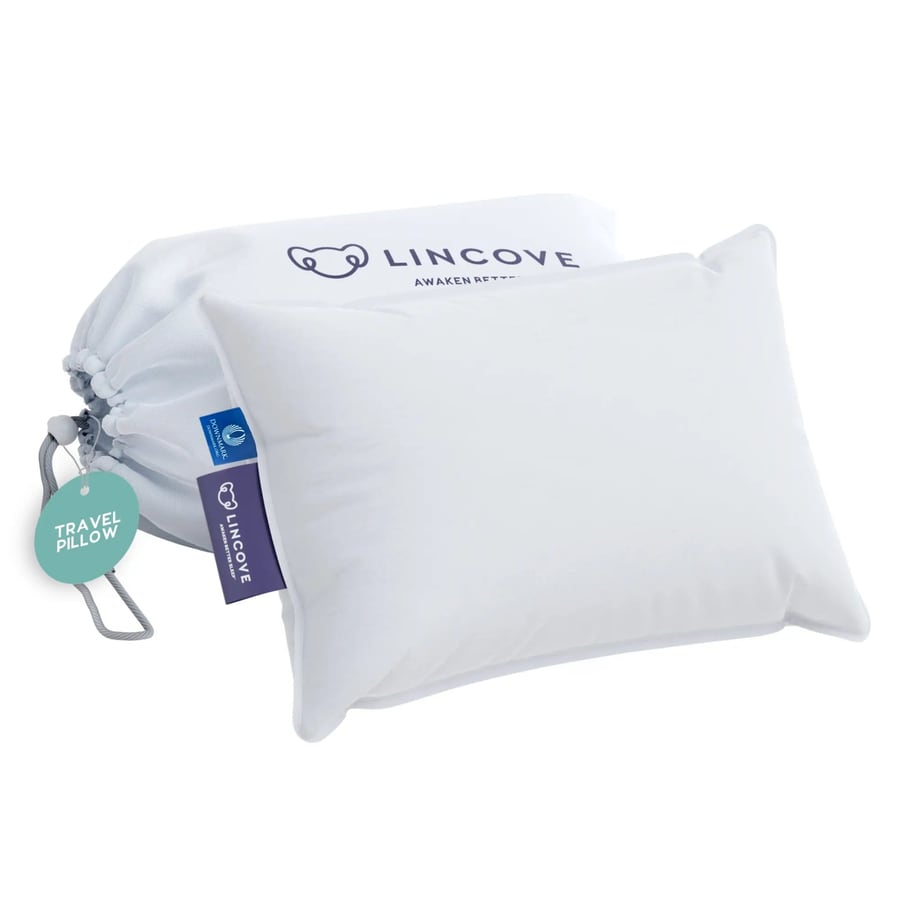
Image: Lincove — Down & Feather Travel Pillow (tap to shop)
This one is a proper down-and-feather pillow in a cotton shell, made at 13”×18” — travel size, which for a child is simply pillow size. It packs into a tote bag, compresses into a packing cube, and comes back to loft when you shake it out, which polyfill does not.
Why it earns the space: on a trip, a pillow is not bedding, it’s a sleep cue. The pillow that smells like home and squashes the way home squashes does more work in a strange room than the room’s own pillows ever will. Ours has covered hotel beds, a sleeper bunk, two overnight ferries and one memorable airport floor, and it’s the item my daughter asks for by name.
The honest caveats: it’s the splurge tier of this list, and if anyone in your family has a confirmed feather allergy, choose a down-alternative in the same size instead.
For the under-fives: bring the pillow they already own
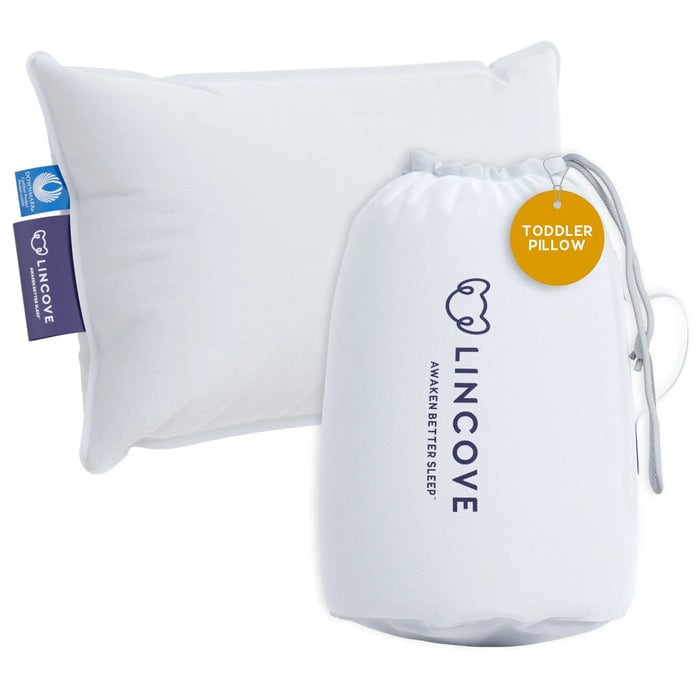
Image: Lincove — Down & Feather Toddler Pillow (tap to shop)
For two-to-five-year-olds, the best travel pillow is usually the toddler pillow from their own bed, because the whole point is that nothing about it is new. Lincove’s toddler version weighs about 12 ounces, which is the number that gets it into the bag instead of onto the “next time” pile. Everything I’ve learned about sizing and loft for small necks is in the toddler pillow shortlist.
One safe-sleep line that never bends: no pillow at all under age one. Babies sleep flat, on their back, with nothing in the crib — pillows are a toddler-bed product, not a travel workaround, and your pediatrician outranks any list including this one.
Upright sleepers: chin support beats the horseshoe
If your child is sleeping in a plane seat or a car seat, the problem is not softness. It’s that a sleeping head has no lateral support and falls forward, which wakes them roughly every ninety seconds.
BCOZZY Kids solves the forward nod, which the standard U-shape does not — the overlapping ends tuck under the chin and stop the drop. It comes in a small size aimed at roughly ages three to seven and a medium for older kids around eight to twelve, it’s washable, and it packs with its own bag. It’s the one I’d buy first for a school-age flyer.
Trtl Pillow Junior is the other approach: a fleece scarf with a hidden internal support that holds the head to one side, sized down for children and petite adults. Kids who hate having something around the whole neck often tolerate this, because it looks and feels like a snood rather than a device. It’s machine washable and flattens into a bag more easily than a U-shape.
Cloudz plush animal pillow is the compliance lane. Support is modest and it’s really a soft toy with a slot for a neck — but a three-year-old who refuses a “pillow” will wear a tiger, and a pillow that gets worn beats a better pillow in the overhead bin. It’s also the one that doubles as a lovey and a car-seat cuddle for the transfer at the other end.
What I’d skip
- Adult neck pillows on a child. They sit too wide, push the head forward, and are worse than nothing.
- Inflatable footrest-and-pillow bed kits. Many airlines restrict them and cabin crew ask for them to be stowed; check your specific carrier’s policy on its own site before you spend, rather than trusting a product listing.
- Memory foam for kids. Sleeps hot, rebounds slowly, and takes up carry-on volume you will want for snacks.
- Anything bulky enough to need its own bag. If it doesn’t clip to a backpack or squash into a packing cube, it stays home by trip three.
Making the pillow actually produce sleep
The pillow is one input. The other three matter more, and they’re free:
Use it at home first. A brand-new pillow introduced at altitude is a novelty toy, not a sleep cue. Two weeks on the bed at home, then it travels.
Time the seat sleep. Bringing the right pillow at the wrong hour still fails — which nap you protect and which you spend is the whole game on an airport day. The low-tech quiet-down alternatives that pair with a pillow better than a screen does are in toddler airplane activities.
Layer for temperature. Cabins run cold at cruise and hot on the ground. A child who is warm enough will sleep on a rolled-up hoodie; a cold one won’t sleep on anything.
Pack it last, on top. A pillow at the bottom of a checked bag is a pillow you don’t have. Mine rides in the carry-on section of the packing list for exactly this reason.
FAQ: kids’ travel pillows
What age can a child use a travel neck pillow?
Chin-support and neck pillows are generally sized from around age three, with a larger size for school-age kids — check the specific product’s stated age range. Under one, no pillow of any kind, awake or asleep.
Is a neck pillow safe in a car seat?
Never add anything behind or beside a child inside the harness path — aftermarket inserts and thick pillows can change how the harness sits. A soft neck pillow worn around the neck, outside the harness, is the usual approach, and the car seat manufacturer’s manual is the authority here, not a blog. My general car-seat-and-sleep rules are in stroller and car seat naps.
Do kids need a pillow on a plane at all?
Not for a short daytime flight. For a red-eye or a long-haul, yes — and if your child is in a lie-flat position or across two seats, a small flat pillow does far more than a neck pillow will.
How do you wash a travel pillow?
Check the label — chin-support and fleece pillows are usually fully machine washable, while down pillows prefer a washable cover doing the day-to-day work and only occasional laundering of the pillow itself.
Is it worth buying two?
If you fly overnight and stay in hotels, yes, and they weigh less than one adult pillow combined. If you mostly road-trip, buy the flat pillow only — it works in the car for a reclined nap and in every bed at the other end.