Stroller and Car Seat Naps: Breaking the Motion Loop
If your baby has stopped napping anywhere except a moving stroller or a car seat, you’re not dealing with a personality — you’re dealing with a habit your trip built, and it usually unwinds in about a week of deliberately boring naps. Every holiday teaches a baby the same lesson: sleep happens when things move. Ten days of pram naps and airport drives, and a cot in a quiet room stops registering as a place where sleep occurs. Here’s how the loop forms, the safety line to hold while you’re in it, and the way out.
Why trips build motion-dependence so fast
Nothing about travel is designed for still naps. You’re out from breakfast to dinner, the room is being cleaned, the hotel cot is in a bright corner, and the only reliable dark quiet moving box you have is the pram. So the pram gets used — twice a day, every day.
Two things then compound. Motion is a genuinely powerful sleep cue, so it works even when the baby is under-tired, over-tired or overstimulated. And because it works every single time, it never gets tested. A baby who has napped in motion thirty times in a row has no recent evidence that a still surface produces sleep, and neither do you — which is why by day eight you stop trying.
This isn’t a failure of holiday parenting. Motion naps are the right call on a travel day; I’ve argued for them plenty in travel day naps. The problem is that the temporary fix quietly becomes the only fix, and it follows you home.
The safety line on car seat sleep
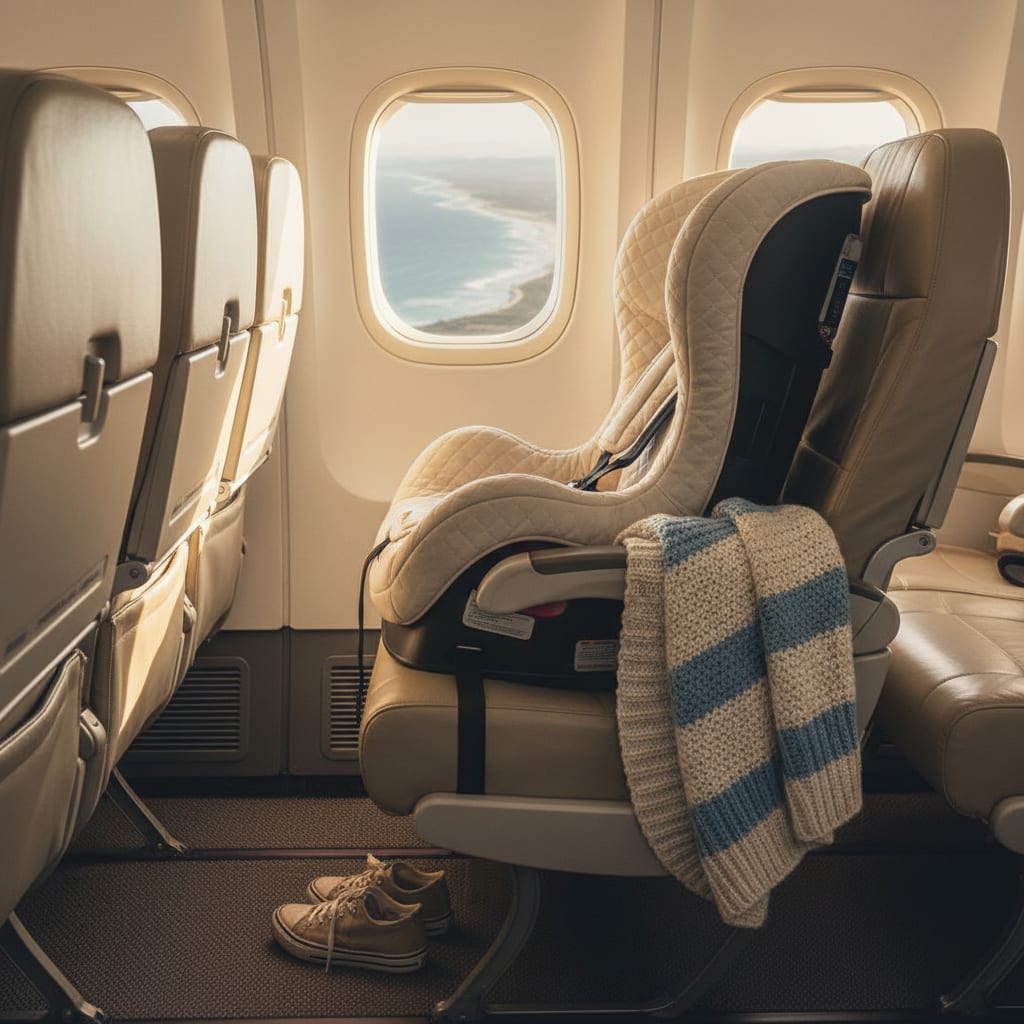
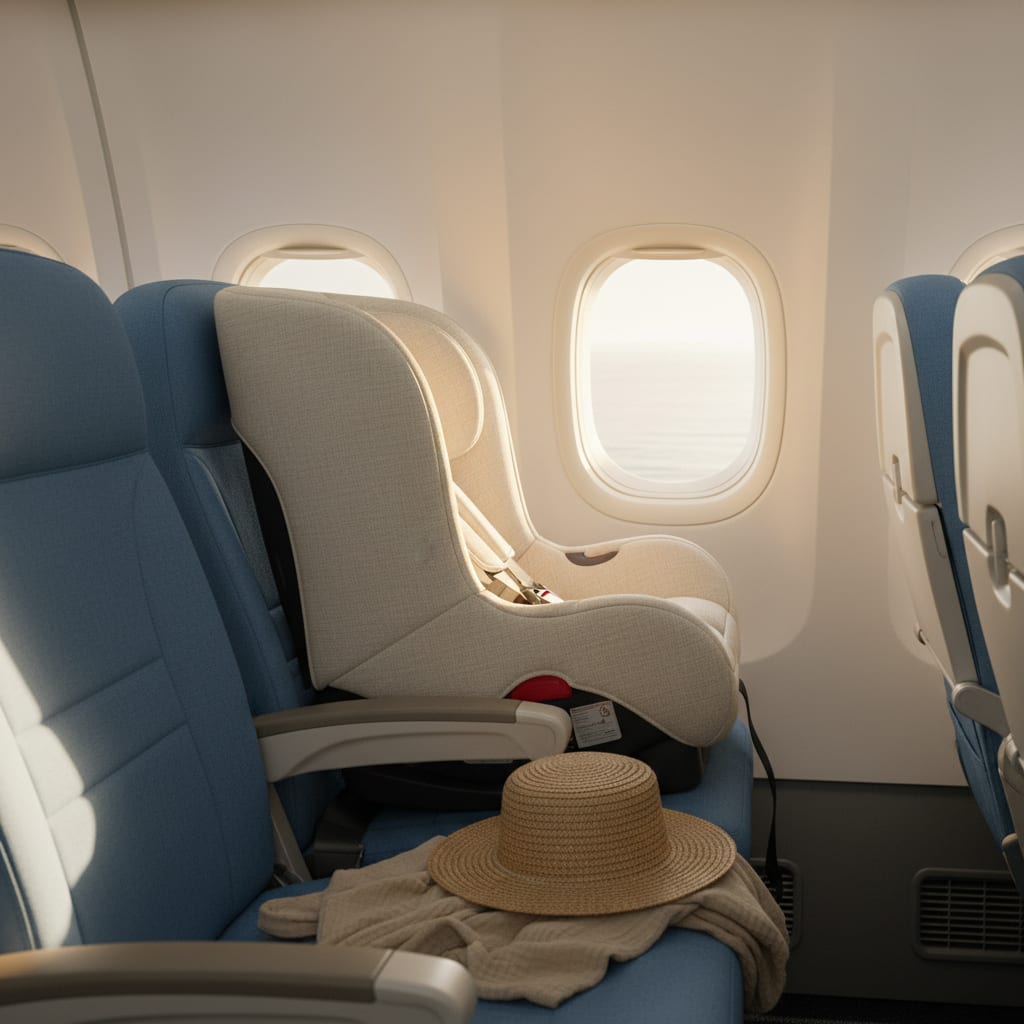
Worth being precise here, because it’s the part that isn’t just about convenience. Car seats, swings and other inclined sitting devices are not safe sleep surfaces for routine sleep. In the car, a correctly installed seat is exactly where your baby should be. Out of the car, the guidance is to move a sleeping baby onto a firm, flat surface — a cot, a travel crib, a bassinet — as soon as it’s practical, and never to leave an infant sleeping unsupervised in a car seat indoors, or with the seat perched on a soft surface or a shopping trolley.
That converts one of your two motion crutches into something with a hard limit. It also means the “just leave them in the car seat in the hotel room” solution isn’t one, however much you want it to be. Your pediatrician is the authority on your particular baby; the general line above is worth holding regardless.
How to tell it’s a habit and not a phase
Three signs it’s the loop rather than something else:
- Stillness produces protest within about two minutes. Not gradual fussing — an immediate objection the moment the wheels stop.
- They fall asleep instantly once you move again. A baby who’s genuinely not tired doesn’t sleep in three minutes of pushing.
- Night sleep is basically fine. Motion-dependence tends to be a nap problem specifically, because bedtime has its own strong routine attached.
If nights have also fallen apart, or the refusal started before the trip did, you’re probably looking at something else — a nap transition, a regression, or a genuine wake-window mismatch. Nap training, properly explained is a good place to work out which of those you’ve actually got before you start changing things.
Unwinding it, one nap at a time
Do not go cold turkey on all naps at once. You’ll get an under-slept baby, which makes settling harder, which makes the whole thing fail. The approach that works is narrow and gradual.
Pick one nap — the first of the day. Morning naps come with the most sleep pressure and the least accumulated overtiredness, so they’re the easiest to win. Every other nap in the day can stay in the pram while you work on this one.
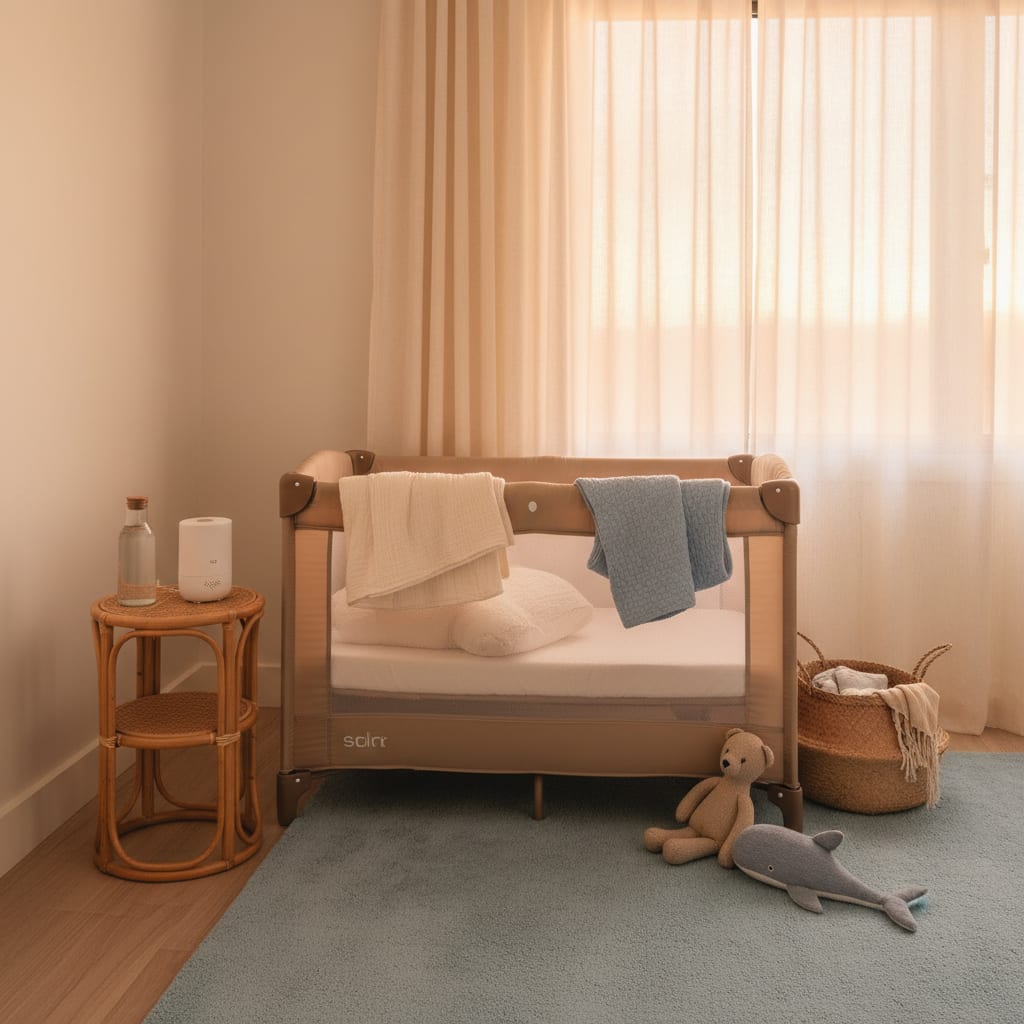
Rebuild the room, not the baby. Before you change anything about how they fall asleep, make the space unarguably nap-shaped: properly dark, white noise running, a consistent short wind-down. Most of what motion was providing was sensory shutdown, and you can supply that without wheels. The portable version of that kit is in baby sleep while traveling.
Shorten the motion, don’t remove it. Day one, push until they’re drowsy and stop the pram before they’re asleep — then keep your hand on them, still. Day two, stop earlier. Day three, transfer to the cot drowsy and pat. By day five or six most babies are going down still. This is the same gradual-withdrawal logic behind gentler settling approaches, applied to one nap instead of the whole night.
Cap the rescue. If the still nap fails after about 20 minutes of trying, go for a walk and let them sleep — but cap that nap at 45 minutes so the next attempt still has sleep pressure behind it.
Keep the wake time fixed. Whatever the naps do, get them up at the same time each morning. It’s the anchor that stops the day drifting while you’re rebuilding it.
What to expect in week one
Day one is usually the worst and the shortest — a 25-minute nap after a long settle counts as a win. Days two and three often look like a step backwards, which is normal and is the point at which most families give up. By day four or five the settle gets noticeably shorter, and by the end of the week you generally have one reliable still nap and a much calmer afternoon.
Two honest caveats. If your baby is under about four months, this isn’t a project — motion naps at that age are completely fine and self-resolve. And if you’re mid-trip, don’t start; the loop unwinds at home, in one room, on a boring schedule. Riding out a temporary refusal while you’re away is a different skill, covered in toddler nap strike on vacation.

FAQ: motion-dependent naps
Are stroller naps bad for babies?
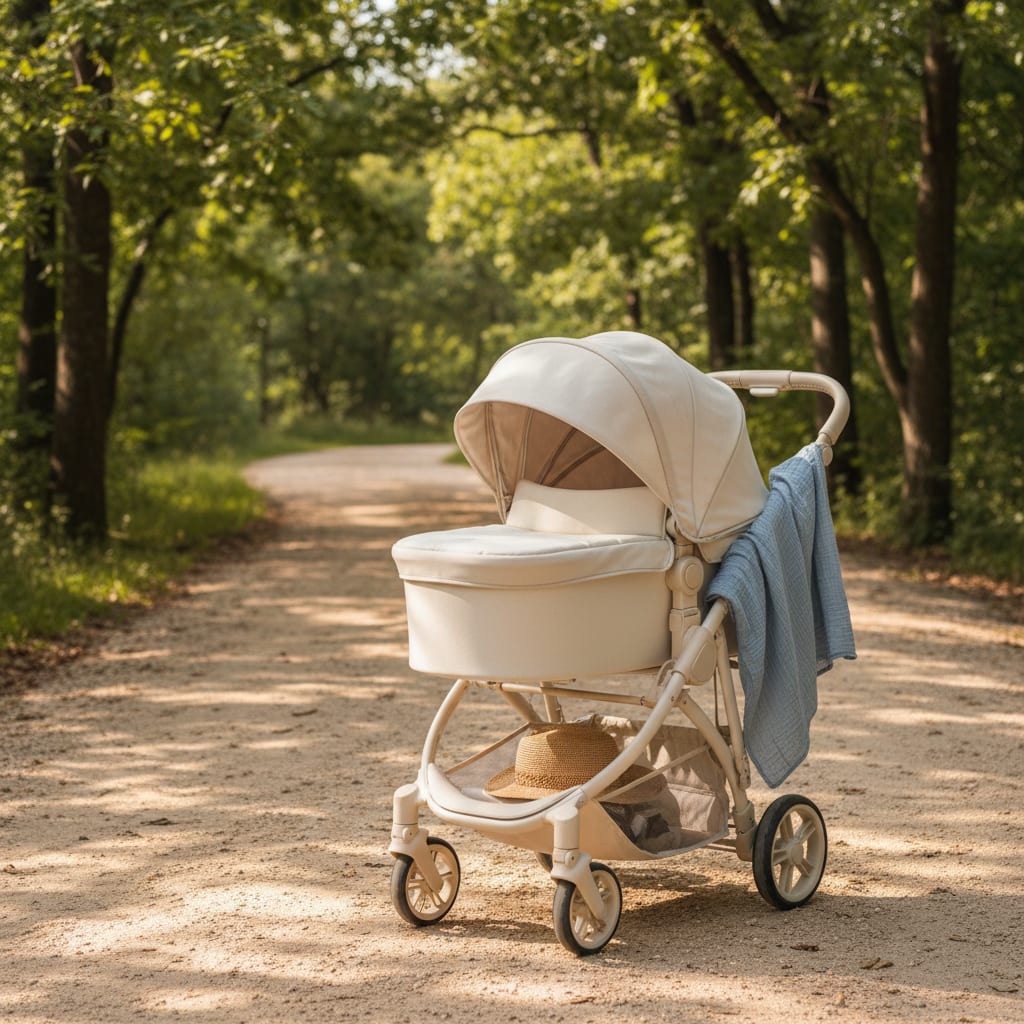
No. A pram with a flat or near-flat recline is a reasonable place to nap, and on a travel day it’s the sensible choice. The issue is exclusivity, not the pram itself.
Is it safe to let my baby sleep in the car seat?
In the car, yes — that’s where they should be. Out of the car, move them to a firm flat surface when you can, and don’t leave a sleeping infant unattended in a car seat indoors.
How long does it take to break a motion nap habit?
Usually five to seven days of consistent effort on one nap, sometimes a bit longer after a long trip. Progress is rarely linear; days two and three often look worse than day one.
Should I fix this before or after a trip?
After, and ideally not right before one either. Start when you have a boring week at home with no flights, no visitors and no nursery changes.
What if the car is the only way to get any nap at all?
Then take it for now and rebuild later. An under-slept baby can’t learn a new nap habit, so sleep first, retrain second. Long drives have their own rhythm — road trip with kids covers building the day around them.