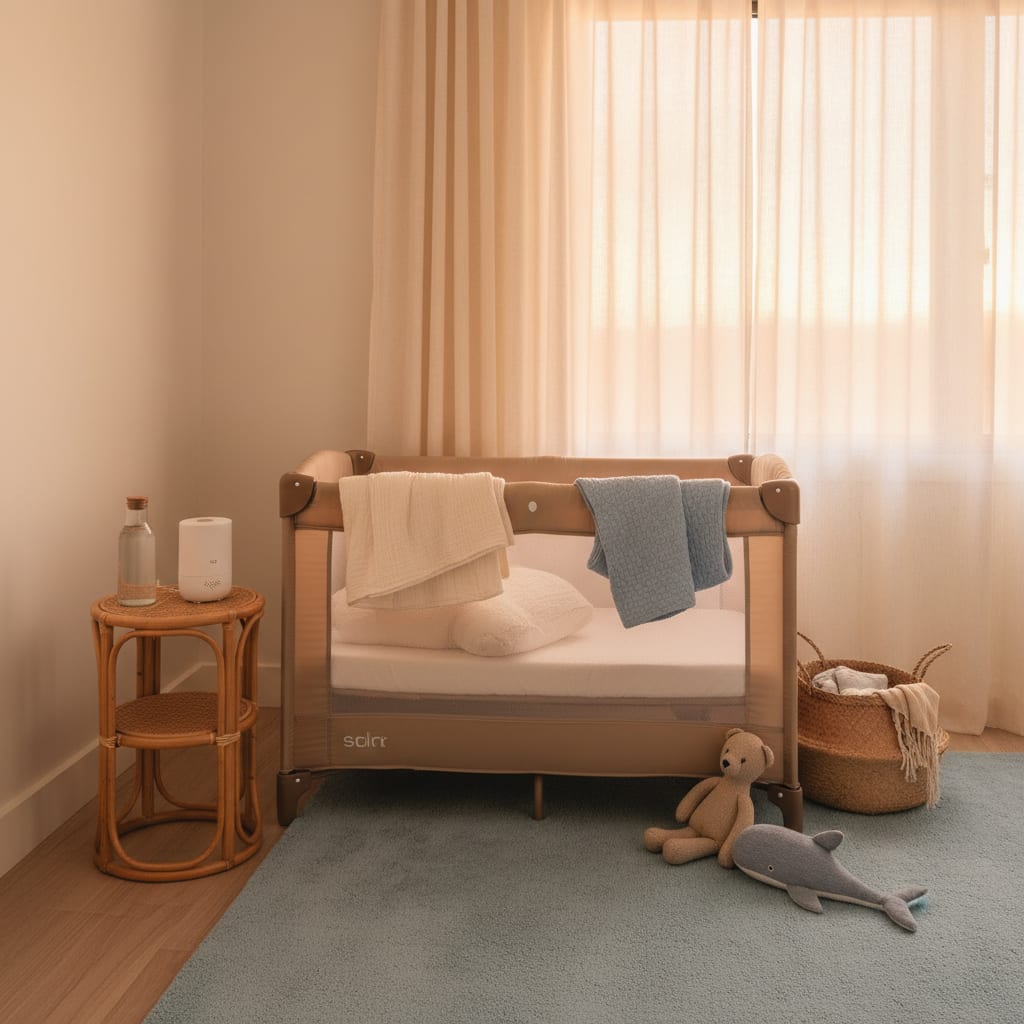
Toddler Nap Strike on Vacation: How to Ride It Out
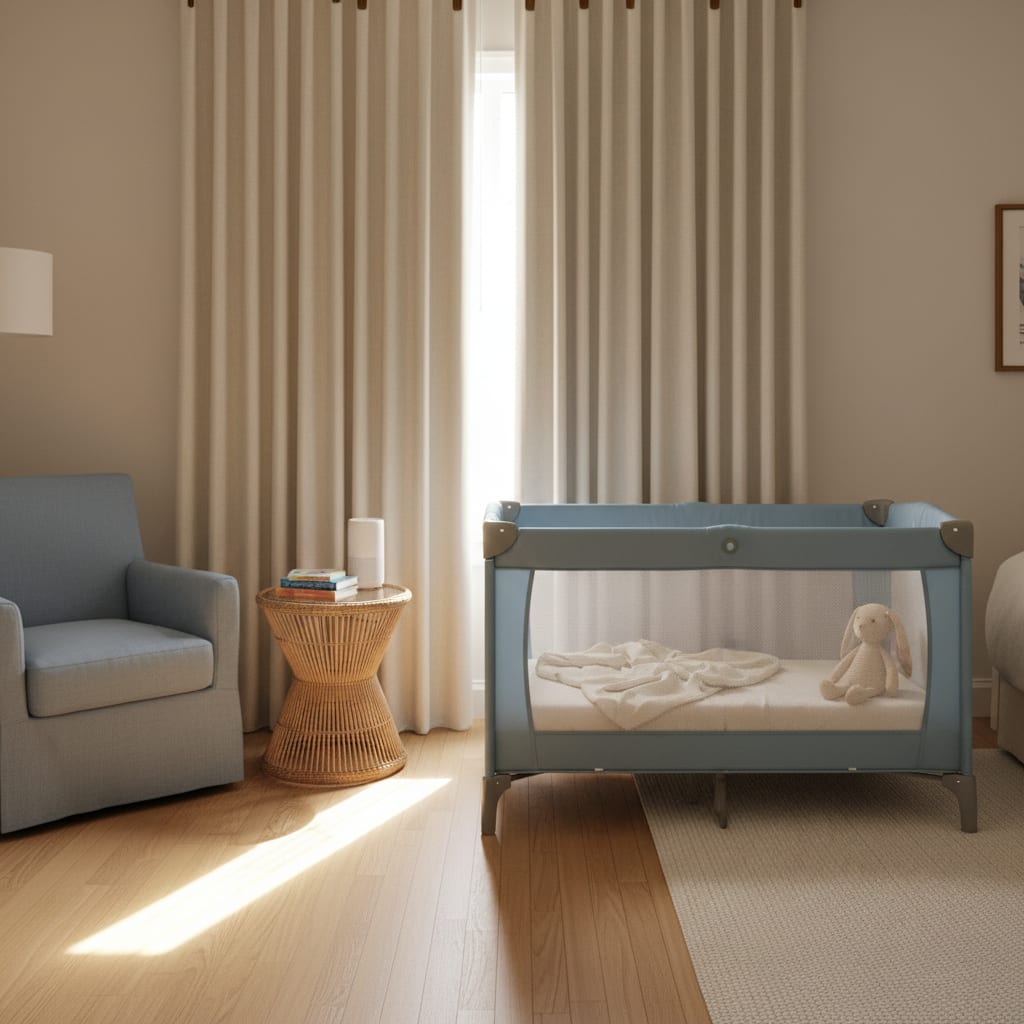
A nap strike is a sudden, stubborn refusal to nap from a child who napped perfectly well last week — and on a trip, the right response is almost always to ride it out rather than rebuild the whole schedule. Most strikes are temporary: a stretch of days where a toddler lies in the travel crib chattering, kicking, or standing up shouting, then quietly resumes napping as if nothing happened. The mistake families make on holiday is treating day three of a strike as proof the nap is over, dropping it, and arriving home with a genuinely broken schedule to fix.
Strike or transition? The distinguishing test
The two look identical for about a week, so use the evenings to tell them apart.
It’s a strike if: they refuse the nap but fall apart by late afternoon — meltdowns over nothing, a stroller doze at 5pm, or an early-evening second wind followed by a hard crash. Bedtime gets harder and night waking may appear. This is a child who still needs the sleep and isn’t taking it.
It’s a real transition if: they skip the nap and stay cheerful into the evening, go down at bedtime without a fight, and sleep well overnight — repeated over a couple of weeks rather than a couple of days.
Strikes have specific triggers, and travel supplies most of them at once: a new room, a developmental leap, teething, a scrapped routine, over- or under-tiredness, and separation anxiety in an unfamiliar place. Betteroo’s short-nap and nap-refusal troubleshooting guide works through the causes in order — worth reading first, because the fix depends entirely on which one you have.
The five-day rule
Give a strike five days before changing anything structural. Keep offering the nap at the usual time, in the usual way, for a fixed window — an hour is plenty. If they don’t sleep, it becomes quiet time: same room, same darkness, same white noise, books or a soft toy, no screens, no negotiation. They rest, you rest, and the habit stays intact so that when the strike lifts, the nap is still there.
What not to do in those five days:
- Don’t push bedtime later to “tire them out” — an overtired toddler fights sleep harder.
- Don’t cancel the nap slot and fill it with an outing. That’s how a strike becomes permanent by accident.
- Don’t introduce a brand-new sleep approach in a hotel room mid-trip. Novelty is the problem, not the solution.
- Don’t let the 5pm car nap happen. Twenty late-afternoon minutes will cost you an hour at bedtime.
Bring bedtime forward instead
The single most useful adjustment during a strike is an earlier bedtime — sometimes 30 to 45 minutes earlier for the duration. It sounds counterintuitive on holiday, but it prevents the overtiredness spiral that keeps the strike going, and a child who’s caught up overnight is far more likely to accept the nap the next day.
On a trip that usually means picking one: the long restaurant dinner, or the nap coming back this week. A balcony picnic after the toddler is down isn’t a lesser holiday — it’s the trade that buys you a functional child for the other six days.
Vacation-specific tactics that actually help
Do the nap where you sleep. Stroller and carrier naps are wonderful for a baby and unreliable for a toddler mid-strike — motion sleep runs short and teaches them the crib isn’t for napping. Go back to the room.
Rebuild the cave. Clip the curtains shut, set the travel crib out of your line of sight, and run continuous sound. A mechanical white-noise machine like the Yogasleep Dohm covers the corridor doors and lift noise that jolt a light napper awake — the one piece of sleep gear that earns its suitcase space every trip.
Give the crib a familiar smell. Same sheet from home, same sleep sack, same comfort object. If you’re using a rented or hotel crib, bring your own fitted sheet; if you travel with your own, a mesh-sided crib like the Guava Lotus sets up quickly and packs down small enough to check without a fight at the desk. The details of hotel-room setup are in my baby sleep in a hotel room guide.
Front-load the day. Big physical activity in the morning — pool, beach, playground — plus plenty of outdoor light, which is the strongest signal a body clock has. Then a calm, indoor, low-stimulation hour before the nap: toddlers can’t go from a splash pool straight to a dark room, and trying is what produces the twenty-minute crib party.
Split the day. One parent takes the older kids out; one stays back for the nap window. Alternate. Nobody has to lose the whole holiday, and the toddler gets a shot at sleeping.

When it isn’t a strike
Two situations where holding the line is the wrong call.
The time zone changed. If you’ve crossed several hours, what looks like a nap strike is usually a body clock still on home time, and the fix is a light-and-timing plan — my baby jet lag playbook covers the shift schedule.
They’re genuinely ready to drop a nap. Somewhere in the second year most toddlers move from two naps to one, and the weeks around that switch look exactly like a strike: refusing the morning nap, or taking it and then refusing the afternoon one. The 2-to-1 nap transition has its own timeline and its own bridging tactics, and a trip is a common place for it to surface, because the routine that was propping up the old schedule isn’t there.
If you’re mid-transition on holiday, don’t force the old pattern. Move to one midday nap for the trip, bring bedtime forward, and sort out the permanent version at home.
Coming home
Strikes usually end as abruptly as they started, and the return home is often the moment. Go straight back to the home routine on day one — same times, same room, same sequence — and expect a couple of scratchy days while everything resettles. If the nap hasn’t returned within a week or two at home, treat it as a real change rather than a phase. The wider set of tactics that keep sleep intact on the road is in baby sleep while traveling.
FAQ: toddler nap strikes on vacation
How long does a toddler nap strike last?
Usually days rather than weeks — often somewhere between two days and two weeks, depending on the trigger. If the child is clearly overtired by late afternoon and bedtime is getting harder, it’s a strike and it will pass. If they’re cheerful without the nap for two weeks straight, it’s a genuine transition.
Should I let my toddler skip the nap on holiday?
Not as a policy. Keep offering the nap at the usual time and turn it into quiet time in the room if they don’t sleep — that preserves the habit. Skipping the slot entirely for a week is the fastest way to turn a temporary refusal into a permanent loss.
What should I do if my toddler won’t nap in the hotel room?
Make the room darker and louder — curtains clipped shut, continuous white noise — put the crib out of your sightline, and use familiar bedding and a comfort object. Then front-load activity in the morning and give a genuinely calm, indoor hour before the nap window.
Is it jet lag or a nap strike?
If you’ve crossed time zones, assume jet lag first: the timing will be shifted in a consistent direction, and night sleep will be affected too. A nap strike in your own time zone shows up as normal nights with a suddenly impossible nap.
Will an earlier bedtime make the nap strike worse?
No — it’s the standard fix. An earlier bedtime tops up the overnight sleep debt that’s fuelling the refusal, and a less overtired child accepts the nap more easily the next day. Later bedtimes reliably make strikes worse.