Toddler Airplane Activities That Actually Work
The best toddler airplane activities are small, novel, and handed over one at a time — the format matters far more than the toy. Ten cheap things produced individually across four hours beat one expensive thing opened at takeoff, every time. Below is what I actually pack, sorted by flight length, plus the two rules that make any of it work and an honest position on screens. Nothing here needs a table, a battery, or a floor to retrieve it from.
The two rules behind everything
Ration, don’t entertain. Keep the activity bag out of sight and produce one item roughly every 20 minutes, starting an hour into the flight. The first hour is free — the window, the seat belt buckle, the tray table and the safety card genuinely carry it. Anything you open before then is an hour you can’t fill later.
Novelty beats quality. A toddler who has never seen an object will study it for twelve minutes; a beloved toy from home gets ninety seconds. Buy a few cheap new things, wrap two of them, and hold the newest item for the final descent when everyone’s patience is gone.
Short hops: under two hours
You need almost nothing. Boarding, climb, snack, descent — the flight is mostly logistics.
- Snacks as an activity. Anything that takes effort to eat buys time: raisins from a small box, cereal loops threaded onto a shoelace, a squeeze pouch.
- Stickers. Reusable sticker scenes stick to the tray table and the window and come off again. A sheet of ordinary stickers and a sheet of paper does the same job for a dollar.
- A window job. “Find me three clouds” is a real activity to a two-year-old.
- One small surprise for the descent. Ear pressure plus boredom is the meltdown combination; a drink and a new object handle both.
Medium flights: three to five hours
This is where structure starts to matter, and where most families run out of material at hour three.
- Water-reveal pads — the pen holds water, the pictures appear, the page dries and resets. Mess-free, reusable for the return flight, and the single most reliable item in my bag.
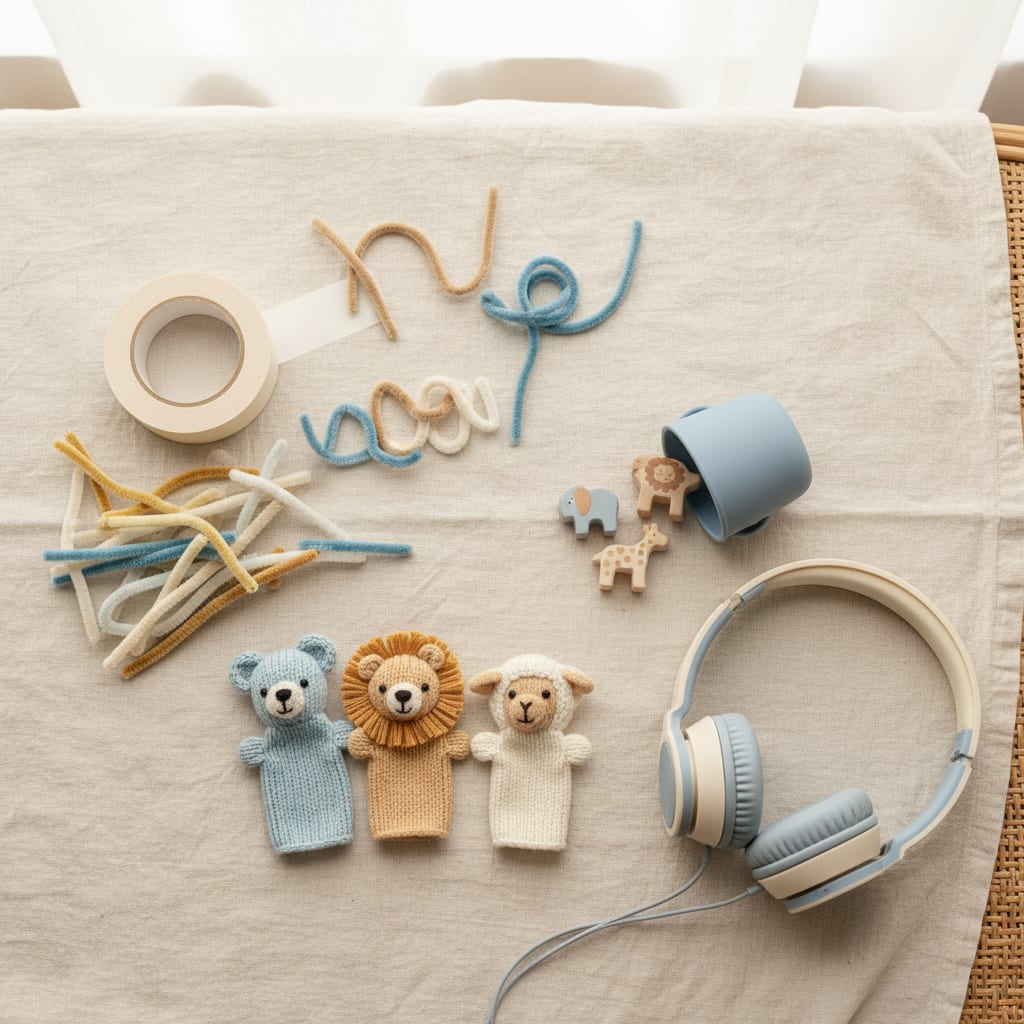
- Wikki Stix — waxed yarn sticks that press onto the tray table and peel off cleanly. They become letters, shapes, glasses, a snake. No pieces to lose down the seat gap.
- Painter’s tape. A roll of low-tack tape is a whole activity: tape roads on the tray, tape shapes on the window, tape a toy down and let them free it.
- Pipe cleaners and a colander lid. Threading is deeply absorbing at this age and weighs nothing. A plastic cup with slits cut in the lid works just as well.
- Finger puppets. Two small puppets and a made-up argument between them buys a surprisingly long stretch.
- A tiny figurine set. Three or four small animals living in a snack cup — a world in the size of a fist.
Long-haul: six hours and up
Long flights need pacing and a sleep plan more than they need toys, but they also need a bigger arsenal.
- A wrapped item every ninety minutes. Wrapping in tissue paper adds a genuine minute of anticipation and turns a $3 object into an event.
- Reusable sticker books and colour-by-water pads on rotation — the resettable formats are the ones that survive an eleven-hour flight.
- A comfort object plus something that smells like home. Sleep on a long-haul is worth more than any activity, and familiar smell is an underrated lever.
- Volume-limiting headphones so the screen half of the flight doesn’t involve tinny audio at full blast — toddler-sized headphones stay on heads that adult ones slide off.
- A snack you’ve never given them before. Unfamiliar food is entertainment.
The screen question, answered
Use it. A flight is not a normal day, the rules that apply at home are not written with 36,000 feet in mind, and no toddler has ever been harmed by four hours of cartoons over the Atlantic.
Two things make screens work better. Download everything before you leave — inflight wifi and toddler patience are a poor pairing. And hold the screen until at least the halfway mark: led with, it stops working by hour two and there is nothing left; held back, it’s the strongest card in the deck exactly when you need it.
What to leave at home
- Anything with more than four pieces. They will end up under seat 24C.
- Noisy electronic toys. Nine minutes in, you will want them gone.
- Play dough and crayons. One melts into upholstery, the other rolls off the tray and lands three rows back.
- New shoes, new anything worn. Novelty is for objects, not for clothing on a travel day.
- A brand-new tablet. Learning an unfamiliar interface at altitude is not a calm experience for anyone.
The rest of the flight — seat choices, boarding strategy, the snack drip-feed and the tantrum script — is in flying with a toddler, and the ticketing and restraint decisions that arrive with the second birthday are in flying with a 2-year-old.
FAQ: toddler airplane activities
How many activities should I pack for a flight?
Roughly one small item per 20–30 minutes of flight time after the first hour, then two spares. For a four-hour flight that’s about eight items, most of them tiny and cheap.
What entertains a 2-year-old on a plane?
Small, novel, tactile things that reset: stickers, tape, water-reveal pads, threading toys, finger puppets. Anything that can be played with repeatedly rather than solved once.
How do I keep a toddler entertained on a long flight without screens?
You mostly don’t, and you don’t need to. Aim to fill the first half with rationed physical activities, use the screen for a stretch of the second half, and plan for sleep on overnight legs.
Do toddler activity kits from Amazon work?
The concept works better than most kits: a bundle of small, resettable, mess-free things is exactly right. Buying the individual pieces yourself is usually cheaper, and you can weight the mix toward what your particular toddler actually likes.
What about long car journeys?
The same rationing logic applies, with more audio and fewer small pieces since you can’t reach into the back seat — my road trip with kids guide covers the driving version.