Baby Nap at the Beach: Shade, Heat and Where It Happens
The best beach-day nap usually happens off the beach. Go to the sand early, leave as the midday sun gets strong, and put the main nap back in the room or rental, where it is cool and still. When the nap has to happen on the beach, three rules apply. It goes in deep, moving-air shade, never under a blanket draped over a stroller. A baby under one sleeps on a flat surface, not in a stroller or carrier. And you check a sleeping child’s chest or neck for heat every time you check the shade. A beach nap is not a darkness problem like a hotel nap. It is a heat and air problem.
Why the beach nap is a different problem
In a hotel room, the nap fails because the room is too bright, which my hotel room naps guide covers. On a beach, a tired toddler will sleep through glare. What matters is heat, and where the air can move.
The timing works against you. The American Academy of Dermatology says the sun’s rays are strongest between 10 a.m. and 2 p.m. and offers a simple test: if your shadow is shorter than you are, seek shade. For most babies and toddlers, that window lands right on the main nap, so plan for the two together.
The default plan: beach morning, room nap
This is the version I use whenever the room is close enough.
- Arrive early. The first hours after breakfast are the coolest and calmest on the sand. A morning nap for a young baby can often happen here, in the shade you set up first.
- Pack up before the shadows get short. Leave while everyone is still happy, not after the meltdown.
- Lunch, then the nap indoors. A cool room with the curtains drawn is where a long nap happens.
- Go back late in the afternoon, when the sun is lower and the beach is quieter.
That is why the beach rental or a hotel a short walk from the sand is worth paying for with small children. My family beach vacations by age list leans toward places where the walk back is easy for this reason.
When the nap has to happen on the sand
Sometimes the room is a long drive away, or the day is too good to cut short. Then the nap happens on the beach, and these are the rules I hold to.
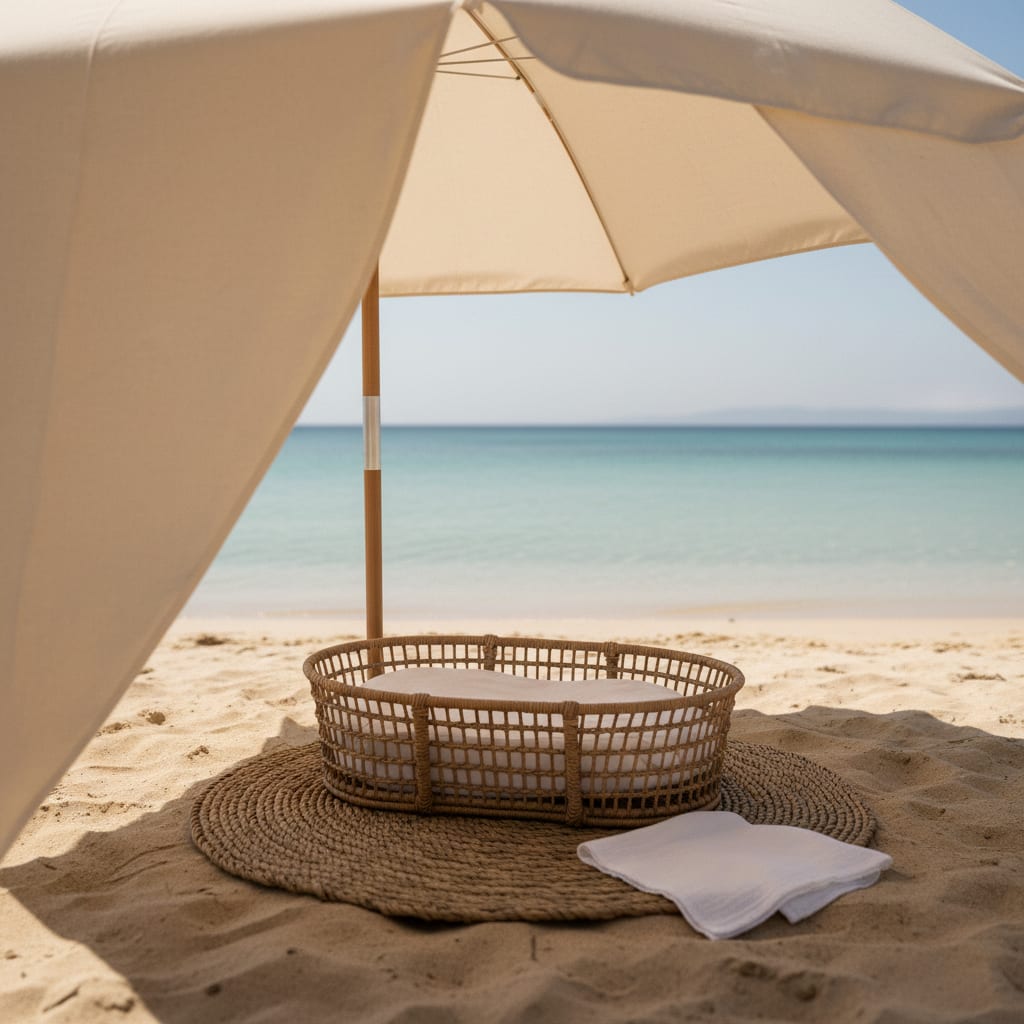
Shade that lets air through. A pop-up tent with sand pockets, like the Pacific Breeze Easy Setup Deluxe XL on my beach packing list, or a big umbrella, gives the nap a home. Open every panel that opens so the breeze can move through. A closed tent in the sun gets warm fast.
Never drape a blanket over the stroller. The Lullaby Trust, the UK’s safer-sleep charity, warns against it: don’t cover prams, buggies and travel systems with blankets, cloths or any cover that stops the air flowing. That risks the baby getting too hot, and it stops you seeing how they are doing. Its suggestion is a clip-on sunshade or parasol, which keeps the shade but lets the air circulate.
Follow the shade. It moves with the sun. A stroller that was in deep shade at 10 can be in full sun by 11. Check where the shadow is every time you check the child.
Use the beach’s own sound. Waves make steady background noise for free. Wind is the opposite: a flapping tent wall wakes a light sleeper. Put the sleeping end of the tent away from the wind.
Babies under one: the flat-surface rule still applies
This is the part that gets lost on holiday. The NIH Safe to Sleep campaign says not to use sitting devices such as car seats and strollers, or carrying devices such as carriers and slings, for naps. If your baby falls asleep in one, move them to their regular sleep space as soon as possible. Beach days do not suspend that.
So for a baby under one, the beach nap has a short list of real homes:
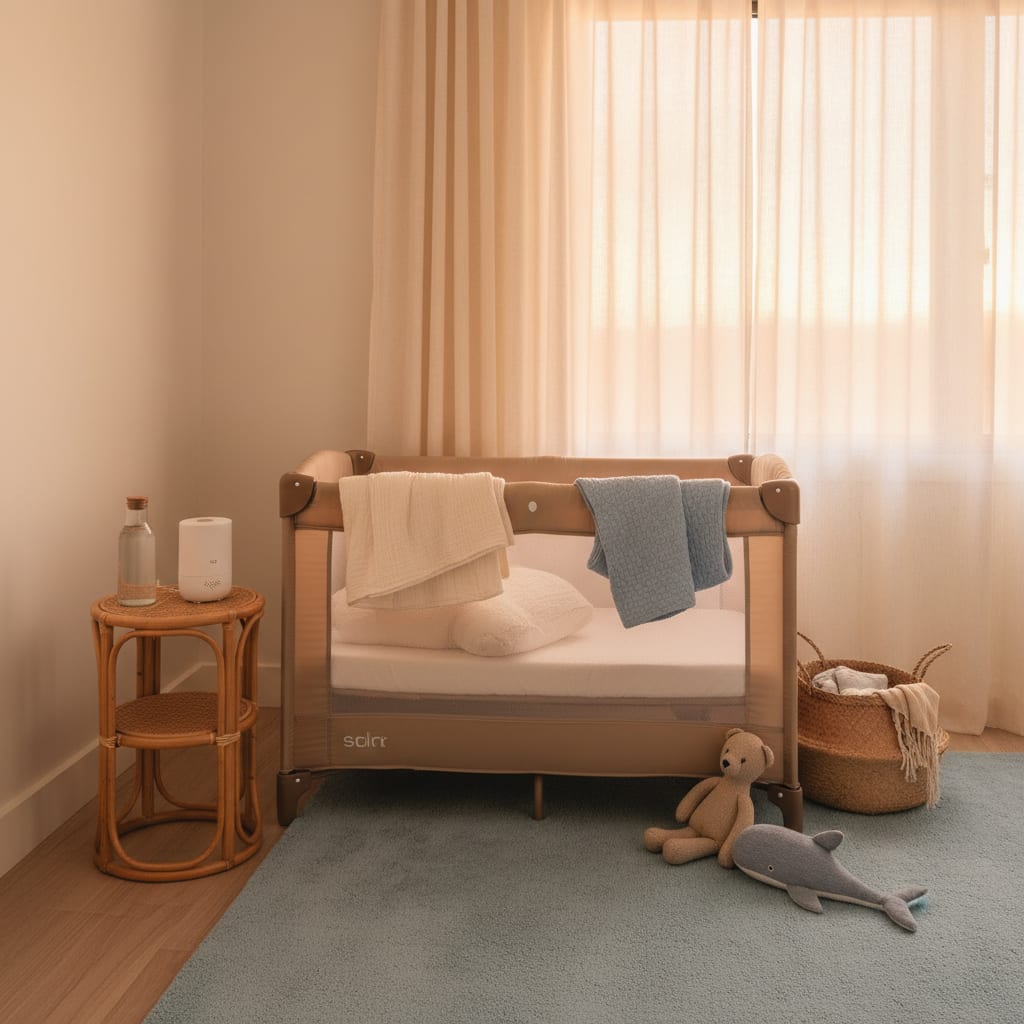
- A lightweight travel crib or play yard in the deepest shade, on the flattest sand you can find, with only a fitted sheet.
- Back in the room. This is the easiest one.
- On you, while you stay awake. A carrier nap while you walk the shoreline is a contact nap. Betteroo’s guide explains the one rule that makes a nap on a parent safe: the adult has to stay awake and alert. On a hot day, remember that two bodies together are warmer than one. Keep these naps in the shade and keep them short.
For babies under 6 months, the American Academy of Pediatrics adds a sun rule: keep babies younger than 6 months out of direct sunlight, in the shade of a tree, an umbrella or the stroller canopy. At that age, the shade is the whole plan.
Toddlers: the stroller nap is fine, the heat is the risk
From about a year, a nap in a reclined stroller in deep shade is a normal beach-day tool. It is often the reason the family gets to stay. The rules change for the nap spot, not for the heat. No blanket over the hood, follow the shade, and check them.
A toddler who has started to fight the nap will fight it hardest at the beach, with all that sand and noise. If the nap falls apart for several days in a row, my toddler nap strike on vacation guide covers how to ride it out and protect bedtime.
How to tell if a sleeping child is too hot
Hands and feet are a poor guide, because they run cool. The NIH lists the signs that a baby is too hot: sweating, flushed or red or hot skin, or a chest that feels hot to the touch. The Lullaby Trust says the same: feel the chest or the back of the neck, and if it is clammy or sweaty, take a layer off. Betteroo’s guide on how to check whether a sleeping baby is too warm sets out the same check, written for a bedroom. On the beach, use it every time you check the shade.
Fluids before the nap. The Lullaby Trust notes that a baby who is only breastfed does not need extra water before starting solids, but may want to feed more often in hot weather. Older babies and toddlers need water too. Offer a feed or a drink before the nap, not just after it.
The car is not a nap room
A drive back to the rental is a good way to start a nap. A parked car is not a place to finish one. The NIH says do not leave a baby alone in a vehicle, no matter the temperature outside. Once you arrive, a baby who fell asleep in the car seat moves to a flat sleep space, even if that wakes them.

If the beach nap is short
A beach nap is often shorter and lighter than the one at home. Do not try to fix it with a second nap at 4pm. Bring bedtime forward by twenty to thirty minutes instead, and treat tomorrow as a new day. One short nap is not a pattern. A week of them, on a trip with beach days back to back, usually means the morning is running too long.
FAQ
Can a baby nap in a beach tent?
Yes, if the tent is in full shade, its panels are open so air can move, and a baby under one sleeps on a flat surface such as a travel crib with a fitted sheet. Check the chest or neck for heat each time you check the shade.
Is it OK to cover the stroller with a muslin at the beach?
No. The Lullaby Trust warns that any cover that stops the air flowing can make a baby too hot. Use a clip-on sunshade or parasol instead.
What time should we leave the beach for nap time?
Before the strongest sun. The AAD puts that between 10 a.m. and 2 p.m. For most small children, that means a beach morning, lunch and the nap indoors, and a second trip to the sand in the late afternoon.