Best Travel Car Seat for Flights & Rentals
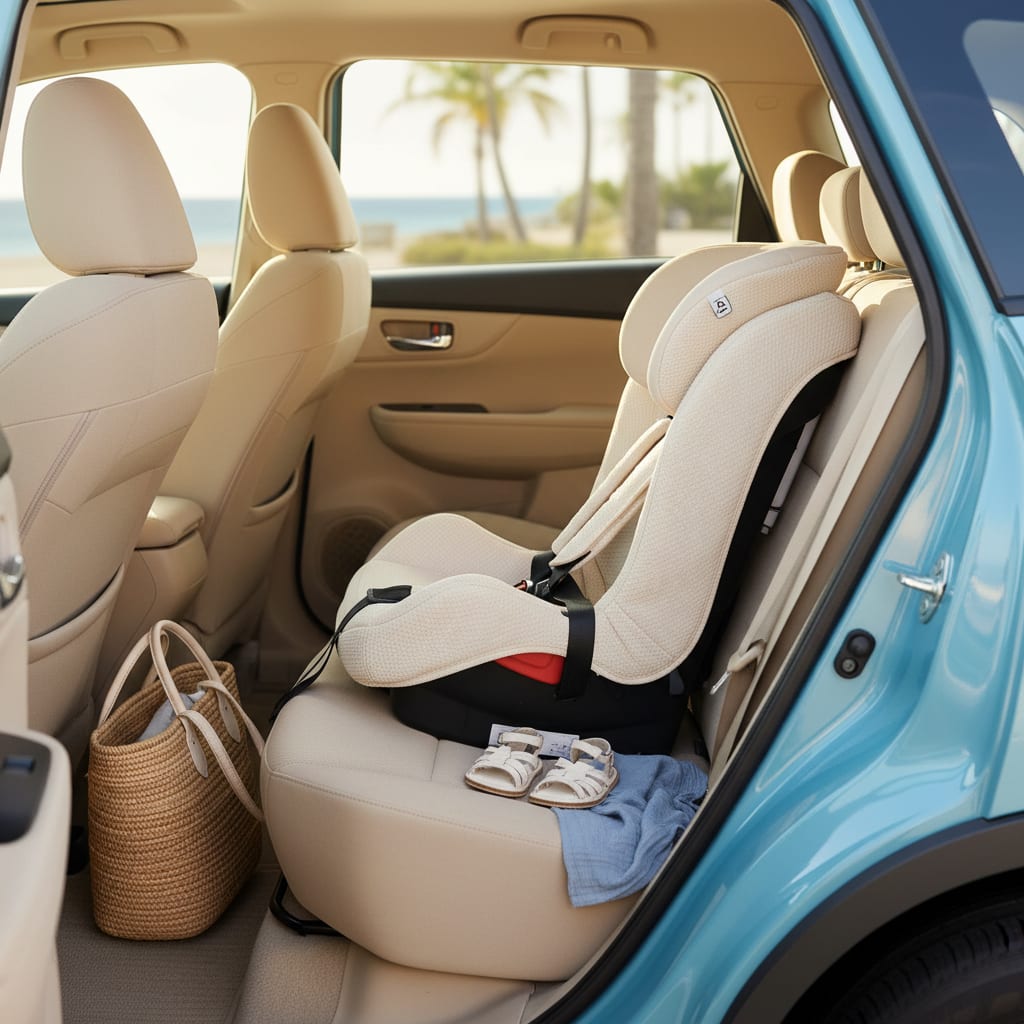
For most families the best travel car seat is the Cosco Scenera Next: it’s aircraft-certified, weighs around seven pounds, rear-faces from roughly 5 to 40 pounds, and costs little enough that you genuinely won’t mind if it gets scuffed in a hold. If your child is past 26 pounds and forward-facing, the WAYB Pico is the upgrade worth paying for — it folds and rides in the overhead bin. Here’s the full shortlist by age, plus what to do when carrying a seat isn’t realistic.
If you buy through links on this page we may earn a commission, at no extra cost to you. Nobody tells us what to recommend.
How I picked
Four things decide it, in this order:
- Aircraft certification. The seat must carry the label reading “certified for use in motor vehicles and aircraft,” or it doesn’t board. The rules around this are in car seat on a plane.
- Weight you can carry. A seat plus a carry-on plus a child through a terminal has a hard ceiling, and it’s lower than you think. Seven to ten pounds is livable; twenty is not.
- Narrow enough to install. Airline seats are narrow and rental cars are unfamiliar. Removable cup holders are worth real money here.
- A price you can shrug at. Travel seats live rough. The best one is the one you’re not protecting.
The seats, by age
Newborn to about a year: Chicco KeyFit 30 ClearTex
Most families already own an infant seat, and it’s usually the right call to bring it — an infant seat clicks into a stroller frame, holds a sleeping baby who stays asleep, and installs in a rental car with the vehicle belt when you leave the base at home. The KeyFit 30 ClearTex rear-faces from about 4 to 30 pounds and is one of the easier seats to get a tight belt-path install with. It’s not light, but for the first year it’s the seat that also solves your stroller problem.
The all-in-one shortcut: Doona
The Doona is a rear-facing infant seat, rated from around 4 to 30 pounds, whose wheels fold out so it becomes a stroller in a couple of seconds. On a trip involving taxis, trains and one sleeping baby, nothing else comes close for sheer friction removal. The trade-offs are real: it’s heavy for an infant seat, the basket is tiny, and you outgrow it inside a year. Rent-a-taxi city trips, yes. A two-week road trip, probably not.
One to four years: Cosco Scenera Next
The travel-seat default for a decade, and still the answer. It’s aircraft-certified, rear-faces from roughly 5 to 40 pounds and forward-faces from 22 to 40, and it’s narrow enough that three fit across a back seat. It’s basic — thin padding, no fancy installation aids — but it does the two jobs a travel seat has, at a price that means you can leave one at grandma’s. Cosco lists it here; it’s widely stocked in the US.
Two to five years, forward-facing: WAYB Pico
The one genuinely designed for this. Around eight pounds on an aluminium frame, forward-facing for children roughly 26.5–50 pounds and 33.5–45 inches, FAA-approved, and it folds down small enough to go in an overhead bin with a carrying bag. It is expensive, and it’s forward-facing only — so it isn’t a first car seat. But if you fly several times a year with a preschooler, it’s the seat that turns “should we even bring one?” into a non-question.
The pound-and-a-half alternative: CARES
Not a car seat at all. CARES is the only FAA-approved harness-type device, certified for roughly 22–44 pounds and up to about 40 inches, and it weighs about a pound. It solves the plane and nothing else — you’ll still need a seat at the destination — so it pairs best with a rental car company you trust or a family member’s spare seat waiting at the other end.
Boosters for the rental car
Boosters can’t be used during taxi, takeoff or landing, because they need a shoulder belt and aircraft have lap belts only. They ride in the overhead bin and come out at the rental desk — and for that job, small beats sturdy.
- BubbleBum — an inflatable backless booster for kids from roughly 40 pounds. Deflated it lives in a daypack; inflated it takes about 20 seconds. It’s also the answer to fitting three kids across a small European hire car.
- mifold Comfort — rated for children about 40–100 pounds and 40–59 inches, and it folds to roughly glovebox size. Rather than lifting the child up to the belt, it pulls the belt down to the child.
Both are for older kids in a car. Neither replaces a harnessed seat for a toddler.
Renting a seat vs bringing one
Rental-counter seats are a lottery. You don’t know the history, you can’t verify it hasn’t been in a crash, and I’ve been handed one with an expiry date already passed. If you rent, inspect it: check the expiry stamp on the shell, check that all the padding and the manual are there, and be prepared to refuse it.
The better middle path on longer trips is a local baby-gear rental company, which typically delivers a named model in good condition to your hotel. It costs more than the rental desk and less than a checked bag’s worth of damage.
Getting it through the airport
Car seats gate-check free on the major US carriers, and so do strollers — so the decision is about damage, not money. A seat going in the hold wants a padded travel bag. A seat going on board wants a strap that lets you wear it on your back so your hands stay free, or a cart trolley if you’re pairing it with a cabin-fold travel stroller.
For the driving-holiday version of all this — installs in unfamiliar cars, and how long a small child will actually tolerate the seat — see road trip with kids.
FAQ: travel car seats
Do I need a car seat on the plane if my child is under two?
Not legally, if they’re ticketed as a lap infant — but the FAA strongly recommends against holding a child during flight. The safety case is set out in flying with a lap infant.
What’s the lightest FAA-approved car seat?
Among widely available seats, the Cosco Scenera Next at around seven pounds and the WAYB Pico at around eight are the light end. CARES, at about a pound, is lighter still but is a harness rather than a seat.
Can I use my normal car seat on a plane?
If it carries the aircraft-certification label, yes. Most US convertible seats do. The practical limits are width — measure at the cup holders — and whether you can face carrying it.
Are inflatable boosters actually safe?
The reputable ones are crash-tested to US federal standards for the weight range on the label. The category is fine; the no-name copies are the problem. Buy a named brand and use it only for kids who genuinely meet the size minimums.
Should I check the car seat or gate-check it?
Gate-check. It stays with you through the terminal, spends less time in baggage handling, and comes back at the jet bridge rather than the carousel.