Second Night Away From Home: Why It's Worse Than Night One
The second night away is usually the harder one, and there is a reason for it. Night one runs on travel-day exhaustion, which papers over everything. By the second evening your child has slept, is rested enough to notice the room and object to it, and — if you crossed time zones — the body clock has started to argue. It is not a sign that the trip was a mistake or that your setup failed. Change nothing about the room, cut day two roughly in half, and move bedtime earlier rather than later.
Which night is worse depends on what broke
Two different things go wrong on a trip, and they peak on different nights.
If the only problem is the room — same time zone, short journey, unfamiliar space — night one is the worst and it improves fast. Children settle into a room by smell, sound and repetition, so by the second night the space has stopped being new. That is the pattern behind my hotel room sleep setup, and on a domestic weekend it holds up.
If the problem is sleep debt or the clock, night two is worse, and it isn’t close. Almost every long-haul family lands here, which is why so many parents come home convinced that travel un-did months of work.
Why night two crashes
Night one spent a debt you hadn’t paid yet
Arrival day is physically enormous for a small person: early start, car, terminal, hours of being carried through noise. They fall asleep out of sheer exhaustion, which makes night one look deceptively easy. Day two starts from a rested baseline, and nothing is buying you compliance any more.
The room stops being a blur and starts being wrong
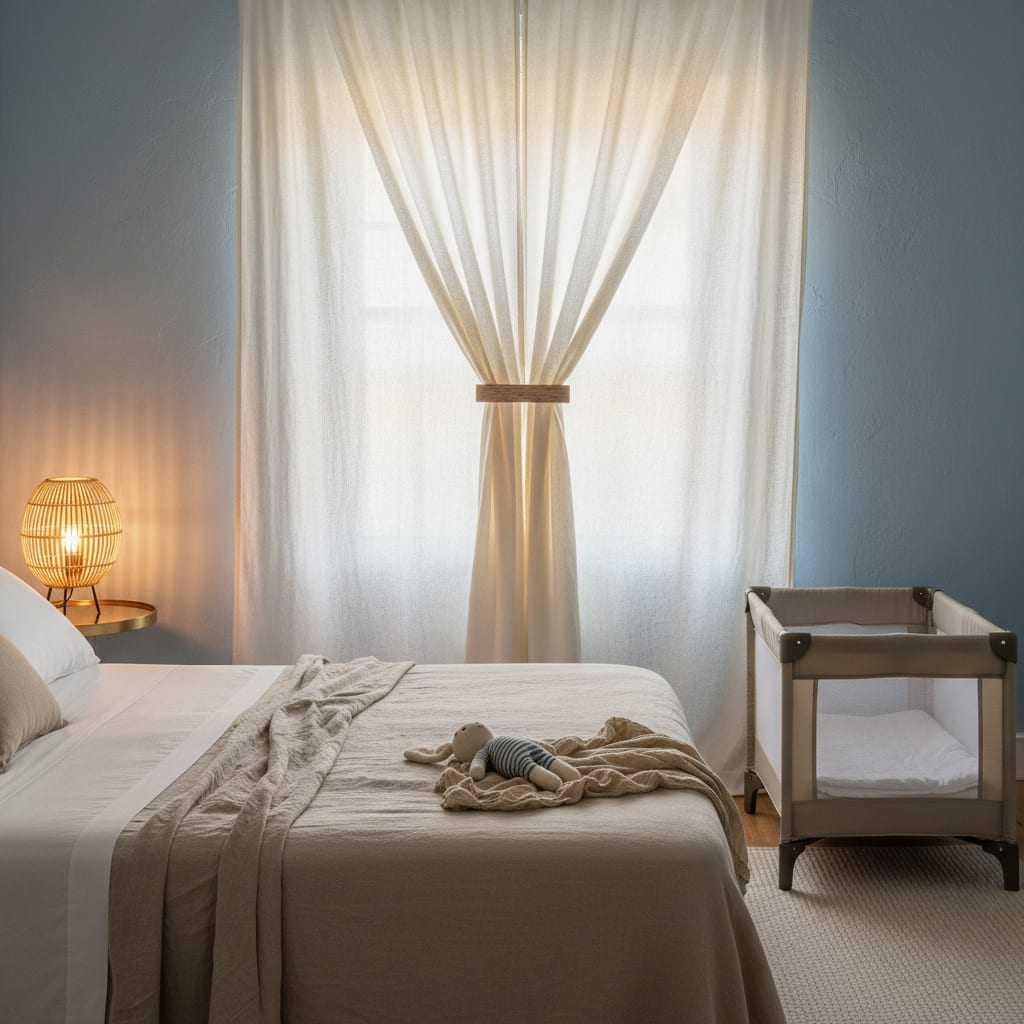
On night one they were too far gone to inspect the place. On night two, after a full day awake in it, they know exactly where they are — and, in a shared room, exactly where you are. At home most babies cannot see their parents from the crib; here they can, and that turns bedtime into a negotiation. If your leaving the room is the event of the evening, Betteroo’s guide to separation anxiety and sleep covers the developmental half.
Day two is the biggest day of the trip
Nobody plans much for arrival day. Day two is the day you actually go: the beach, the museum, the long lunch, the walk that was further than it looked. Heat, noise and a nap taken in a stroller at the wrong hour all land on one evening.
This is the part parents get backwards. An overtired child does not sleep more deeply to compensate — they tend to fall asleep fast, then come apart at one in the morning or wake for the day at five. A wrecked night two is usually just a day two that was too big.
If you changed time zones, add a day
Jet lag stacks its own timetable on top: the first night is carried by exhaustion, the second is when home time and local time fight in the open. I go through the day-by-day shift in toddler jet lag and, for babies, in baby jet lag. If you crossed more than a couple of hours, treat those as the main plan and this as the room-level version.
The day-two plan
Night two is won during the day. By seven in the evening there is very little left to do.
Get outside early. Morning light is the strongest available signal for a drifting body clock, and it is free. Breakfast outdoors beats an hour in the room.
Protect one real nap. Not three car naps — one proper one, in the crib, near the home clock time. If the room won’t go dark enough, the fixes are in hotel room naps; if it still won’t, a stroller nap in deep shade counts and bedtime moves earlier.
Pick one outing, not three. You will do more on day three because everybody slept.
Eat earlier than feels right. Holiday dinner times are the quiet killer of night two.
Bring bedtime forward twenty to thirty minutes. Every instinct says the opposite — tire them out, they’ll sleep. On day two you are paying off a debt, not building one.
Run the identical wind-down. Same order, same sleep sack, same phrases — the most portable sleep cue you own.

Change nothing about the room
The strongest urge on day two is to fix things: move the crib somewhere better, add another blackout layer, try the bathroom instead.
Resist all of it. Familiarity is the only asset you have and it is built purely by repetition — two identical nights in a mediocre spot beat two clever nights in two different spots. The one exception is a genuine safety or light problem you could not see in the dark, like a cord within reach, and that gets fixed in daylight rather than at bedtime.
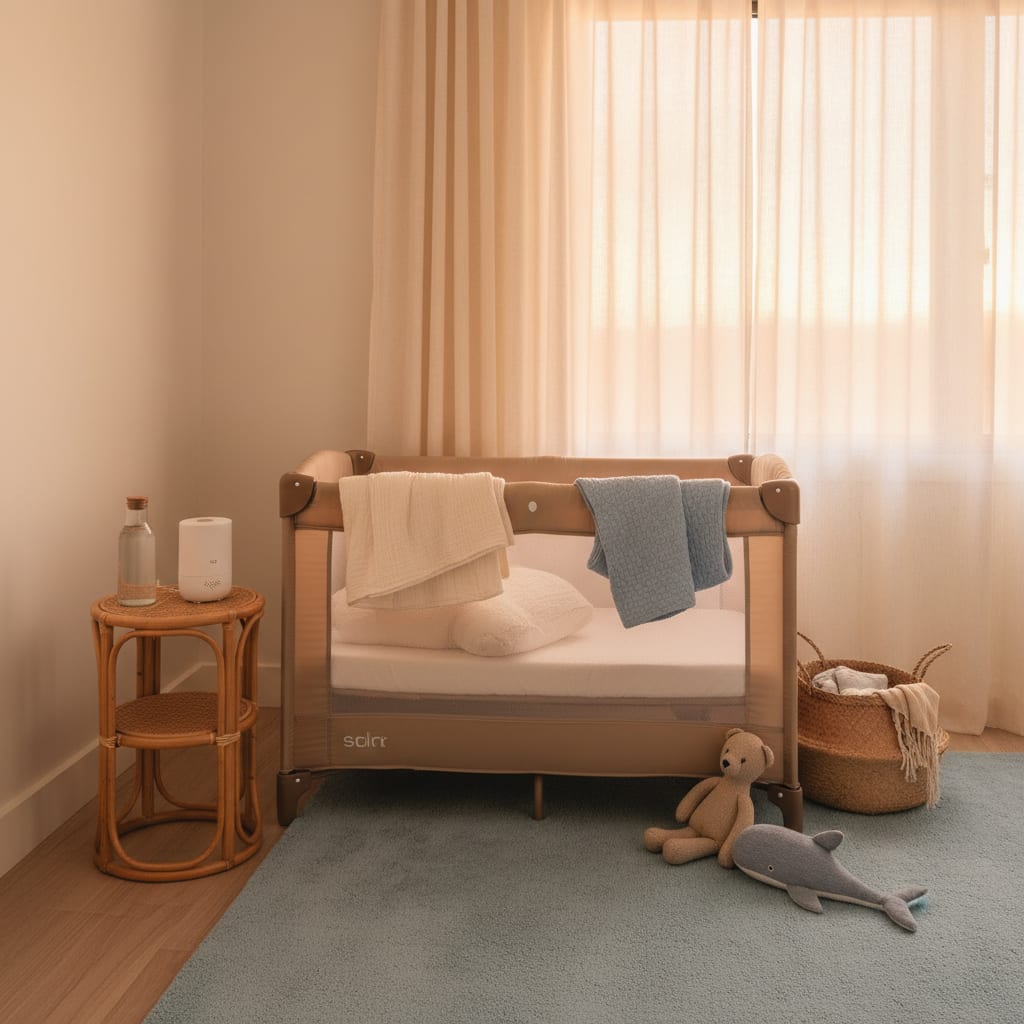
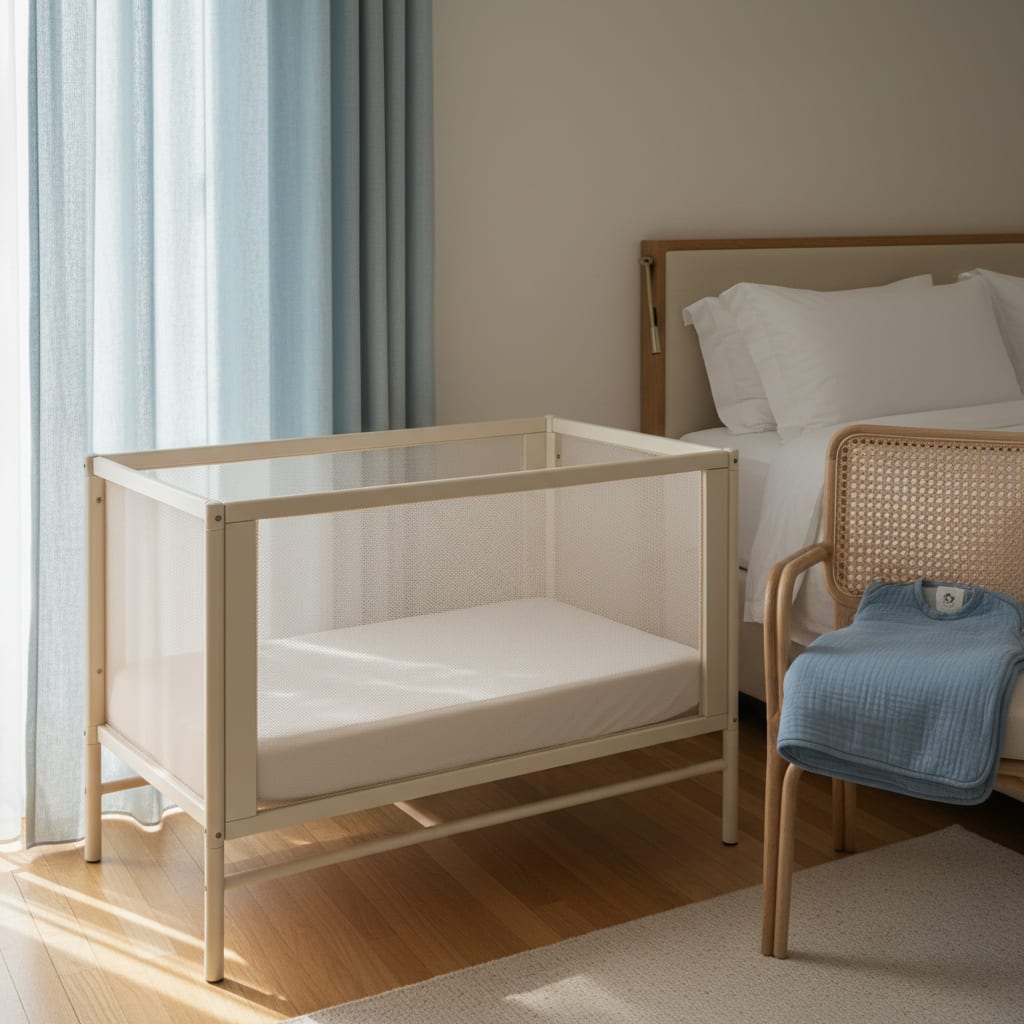
The same goes for gear: night two is not the night to debut a travel crib your child has never slept in, or a new lovey. The safe-sleep line you hold at home — nothing soft in the sleep space for the first year, baby on their back, firm flat mattress — does not lift on holiday.
Sound is the one thing worth adding, because a hotel corridor at eleven at night is a different animal from your hallway. If your machine at home is a plug-in one that stays there, a rechargeable travel version like the Yogasleep Rohm has a lanyard, so it can hang on a wardrobe handle near the crib rather than go anywhere inside it.
The one o’clock wake-up itself
Decide in advance how you will handle it, because 1am is a terrible time to form policy. Keep it dark, dull and short: no overhead light, no conversation, no trip to the balcony. Treat anything before a civilised hour as a night waking, not the morning, even when the sun is up two hours earlier than at home.
Most of all, don’t start something on night two that you will spend a fortnight unpicking at home. One night of rocking to sleep is a bad night; five nights of it is a habit. And a hotel bed with a heavy duvet and stacked pillows is not a safe sleep surface for a baby, however tempting it looks at 3am — the crib stays the plan.
When night three doesn’t arrive
The usual shape is improvement on night three and something close to normal by night four or five — faster on a short domestic trip, slower the more time zones you crossed. If it is still bad on night four with no time-zone change to blame, stop looking at the room. Teething, a cold coming, a nap that has quietly slid later, or a child who has dropped a nap mid-trip are likelier culprits by then. On a two- or three-night trip, don’t run a project at all: protect bedtime, take the easy naps wherever they fall, and go home.
FAQ: the second night away from home
Why is the second night away from home worse than the first?
Because night one is carried by travel-day exhaustion. Once that is spent, your child is rested enough to notice an unfamiliar room, day two is usually the busiest day of the trip, and any time-zone difference has begun to bite. A lovely night one is flattering rather than representative.
How many nights does it take a child to settle in a new room?
Most families see clear improvement by the third night and something close to normal by the fourth or fifth, provided the room setup and bedtime routine stay identical each night. Crossing time zones stretches that out — roughly a day per hour of difference is the usual rule of thumb.
Should I keep them up later on day two so they’re tired enough?
No. Overtiredness makes night sleep more broken rather than deeper, so a late bedtime on day two tends to buy a 1am wake-up and a five o’clock start. Move it twenty to thirty minutes earlier instead.
Will we have to sleep-train all over again when we get home?
Usually not — a trip disrupts the schedule far more than it undoes the skill. Go back to your home routine, room and wake time on the first day back, hold steady for three or four days, and most children slot straight in.